The best travel carrier for a large dog is one that provides enough room to stand, turn, and lie down while remaining secure, ventilated, and practical for your method of transport. For many bigger dogs, a rigid crate, reinforced vehicle kennel, or carefully sized travel enclosure is more suitable than a soft-sided carrier.
This guide is based on general animal-transport safety principles and observable carrier features, not personal product testing or a current review of individual models. Use it to compare designs, check manufacturer measurements, and decide whether a carrier is appropriate for car journeys, public transport, or air travel.
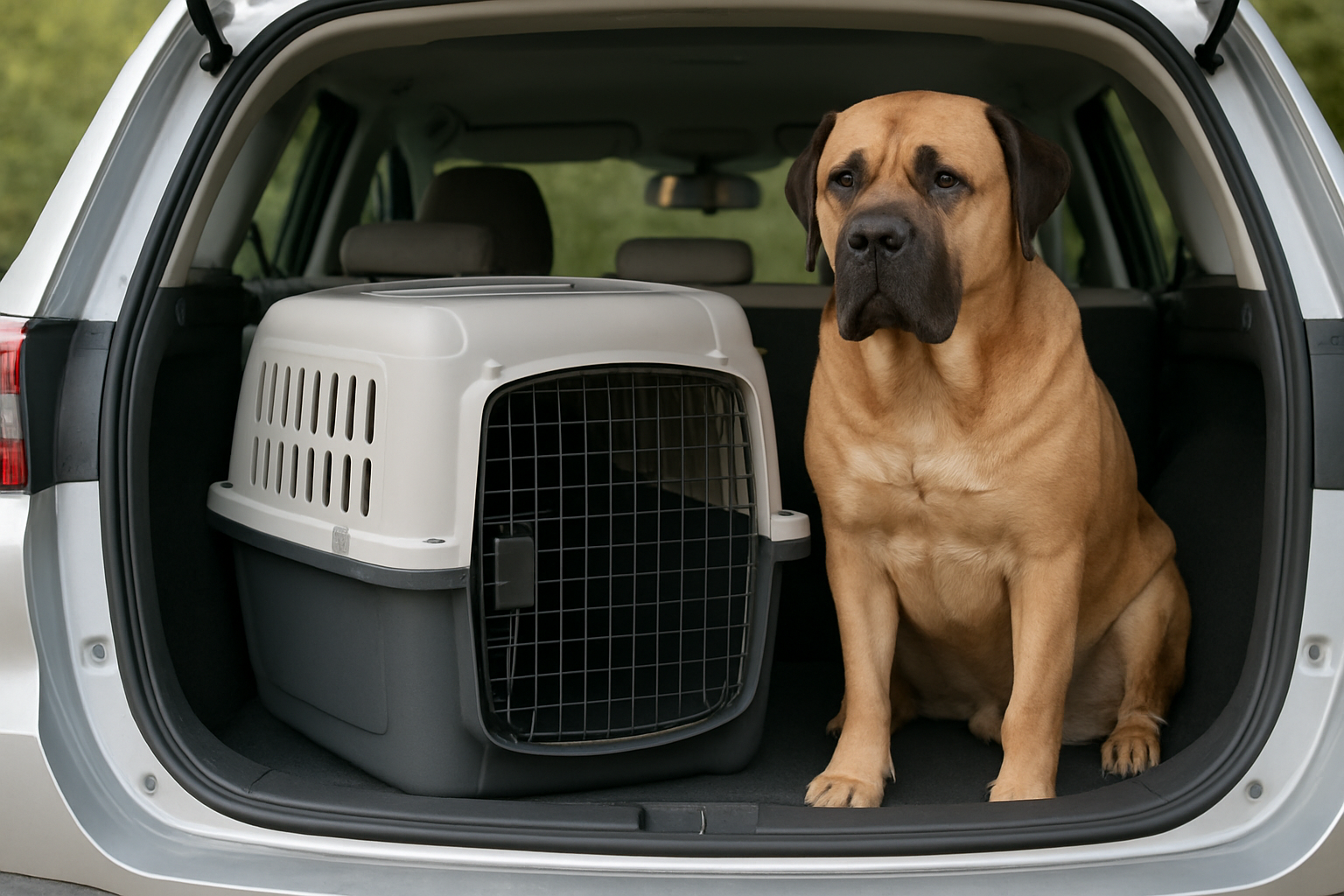
1. Measure your dog before comparing carriers
Large-dog carriers are often sold by external dimensions or weight ranges, but those figures are not enough on their own. A dog’s body length, shoulder height, and overall build determine whether the interior will actually be usable.
Measure your dog while standing naturally. Record the floor-to-top-of-head height, nose-to-base-of-tail length, and the widest part of the body. Add room for normal posture, but do not rely on an oversized carrier that allows your dog to slide around during movement.
- Height: your dog should be able to stand without pressing its head or ears against the roof.
- Length: allow enough floor space to lie down and reposition comfortably.
- Width: the dog should be able to turn around without its shoulders catching on the sides.
- Entry: check that the doorway is large enough for the dog’s shoulders and body shape, not just its head.
Recheck the product’s internal dimensions rather than assuming the listed external size describes usable space. If your dog is still growing, account for its likely adult size and consider whether a divider or different travel solution would be safer than buying a carrier that is excessively large now.
2. Match the carrier to the type of journey
There is no single best travel carrier for every large dog. A carrier used inside a car has different requirements from one carried through a station or presented at an airline check-in desk.
For car journeys, stability and restraint are central. A rigid kennel may provide more predictable protection from shifting luggage and sudden movement than a lightweight fabric carrier, but the way it is secured matters as much as the shell. Follow the vehicle and carrier manufacturer’s instructions, and never leave a dog unattended in a hot or poorly ventilated car.
For trains, buses, or other public transport, check the operator’s current rules before purchase. Some services restrict carrier dimensions, require a particular type of enclosure, or do not accept large dogs in enclosed carriers at all.
Air travel requires especially careful verification. Airline policies can differ by route, aircraft, cabin or cargo arrangements, and the dog’s size. A carrier marketed as airline-friendly is not automatically accepted by every airline, so confirm the exact dimensions, construction, ventilation, fasteners, and documentation requirements directly with the carrier and airline.
3. Compare the construction and safety features
Inspect the carrier as a piece of equipment rather than judging it by appearance. Large dogs can place considerable force on doors, seams, handles, and ventilation panels, particularly when anxious or unfamiliar with travel.
The following comparison helps separate useful features from warning signs.
Use this checklist when comparing large-dog travel carriers:
| What to look for | Why it matters | Warning sign |
|---|---|---|
| Rigid or strongly reinforced structure | Helps the carrier retain its shape and resist collapse | Walls buckle when pressed or the roof sags into the interior |
| Secure door and dependable fasteners | Reduces the risk of escape during loading and transport | Door flexes, latch opens easily, or hardware feels loose |
| Ventilation on several sides | Supports airflow and lets the dog see its surroundings to a limited extent | Large areas are covered or airflow is blocked by padding |
| Non-slip, washable floor | Improves footing and makes accidents easier to clean | Slippery base or absorbent material that cannot be removed |
| Rounded, covered edges | Limits snagging and sharp contact during movement | Exposed wire ends, rough seams, or protruding screws |
| Strong carrying points or tie-down points | Makes handling and vehicle installation more controlled | Thin straps or handles attached only to flexible fabric |
Ventilation should not be confused with maximum exposure. A nervous dog may benefit from partial visual shielding, provided airflow remains unobstructed. Avoid modifying the carrier with blankets, covers, or accessories that cover ventilation openings or create a chewing hazard.
4. Choose between rigid, soft-sided, and vehicle-specific designs
Rigid carriers and kennels
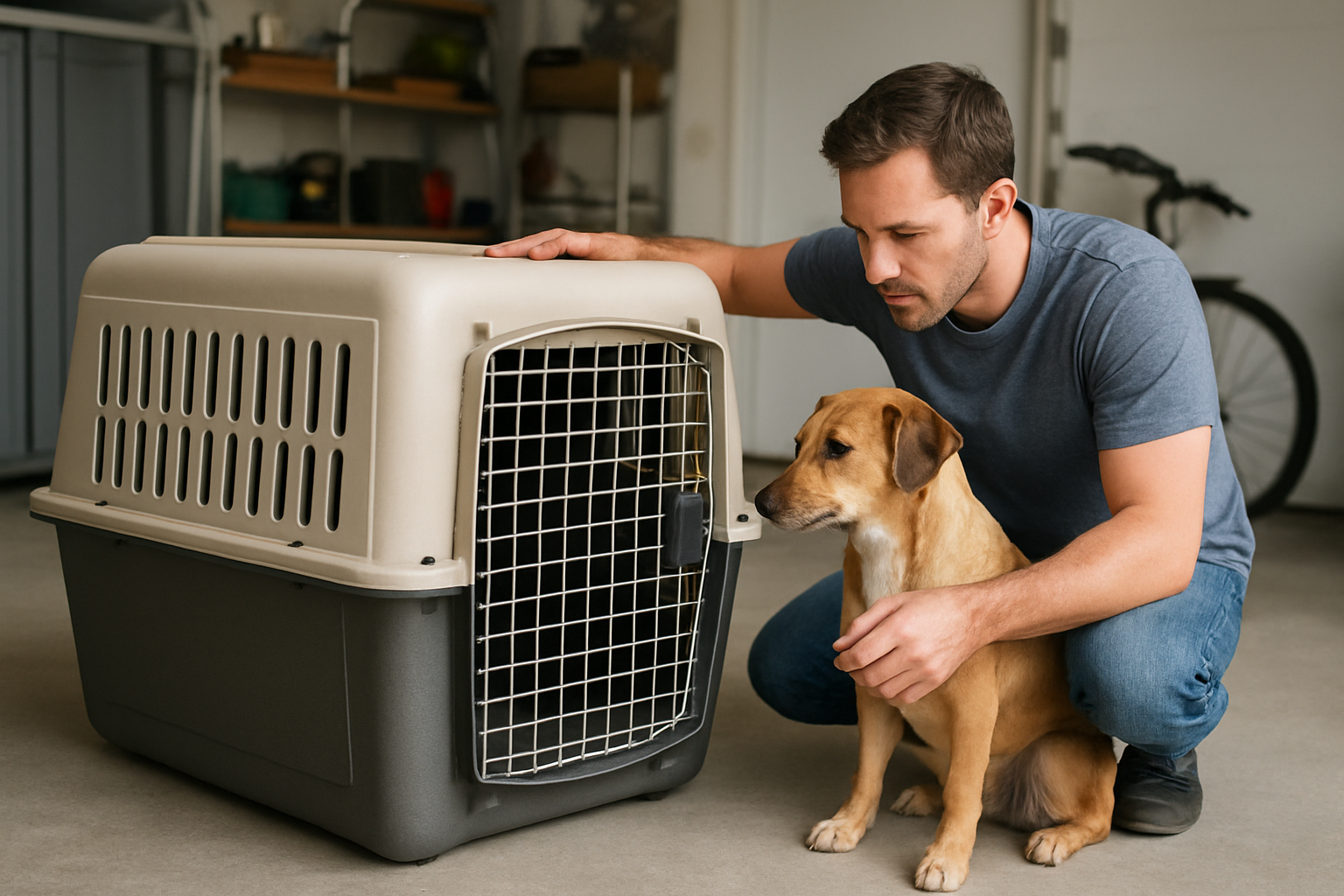
Rigid plastic or composite kennels generally offer a defined structure, washable surfaces, and strong protection from surrounding objects. They can be a practical choice for car travel and some approved transport situations, but they may be heavy and difficult to carry when sized for a large dog.
Soft-sided carriers
Soft-sided designs are usually lighter and easier to store. For a genuinely large or powerful dog, however, inspect the frame, base, zippers, mesh, and attachment points carefully. They may be unsuitable if the dog pushes against the sides, chews fabric, or needs substantial structural support.
Vehicle crates and barriers
A vehicle-specific crate or a properly installed barrier may be more practical than a hand-carried carrier for dogs that are too heavy to lift. The setup must not interfere with the driver, emergency access, or the vehicle’s safety systems. Cargo-area arrangements should be stable and should not allow the dog to move unpredictably around the vehicle.
5. Prepare your dog before the first trip
A well-designed carrier cannot compensate for rushed training. Introduce it at home with the door open, use familiar bedding if it does not obstruct ventilation, and allow your dog to investigate at its own pace.
- Reward calm entry and quiet resting rather than forcing the dog inside.
- Close the door for short periods while you remain nearby.
- Practice brief journeys before attempting a long trip.
- Check for overheating, excessive panting, drooling, panic, or repeated attempts to escape.
- Keep identification details and relevant veterinary information accessible.
If your dog shows severe travel anxiety, vomiting, breathing difficulty, or repeated escape behavior, speak with a veterinarian or qualified behavior professional before a long journey. Do not give calming medication unless it has been specifically discussed with a veterinarian; sedation can create additional risks during transport.
6. Avoid common large-dog carrier buying mistakes
Buying by weight limit alone
A stated weight capacity does not confirm that the interior is long or tall enough. Compare your dog’s measurements with the internal floor area and head clearance.
Choosing the largest possible size
Extra space is not always safer in a moving vehicle. Too much unused room can allow a dog to slide or be thrown against the sides. Select adequate space for natural posture while prioritizing stability.
Assuming “airline approved” is universal
Transport requirements can change and can vary between airlines and routes. Confirm the current rules in writing before committing to a carrier or booking travel.
Ignoring cleaning and maintenance
Inspect zippers, latches, mesh, hinges, and fasteners regularly. Replace a carrier if structural damage, sharp edges, cracked panels, or weakened attachment points appear.
7. What if your dog does not fit a conventional carrier?
Some large, tall, broad-chested, or anxious dogs are poor candidates for a traditional hand-carried enclosure. In that situation, compare a properly sized vehicle kennel, a secure vehicle barrier, or a transport service that handles larger dogs according to applicable rules.
If your dog cannot stand, turn, or lie down naturally in the available equipment, do not proceed simply because the journey is short. Ask the transport provider, veterinarian, or a qualified animal behavior professional about a safer plan. For general dog-care preparation, you can also explore the practical guidance available on the LaokPet homepage.
8. Large-dog travel carrier checklist
- Measure height, length, and width before shopping.
- Confirm internal dimensions, not only external dimensions.
- Check standing, turning, and lying-down space.
- Inspect the door, latch, seams, frame, and ventilation.
- Choose a washable, non-slip floor.
- Plan how the carrier will be secured or handled.
- Verify current rules with the airline or transport operator.
- Introduce the carrier gradually at home.
- Pack water, identification, cleaning supplies, and familiar but safe bedding.
- Stop and seek professional advice if your dog shows serious distress or breathing problems.
Next actions before you buy
Start by measuring your dog and writing down the smallest acceptable interior dimensions. Then decide whether the journey is mainly by car, public transport, or air, because that choice will eliminate many unsuitable designs.
Shortlist carriers with secure construction, useful ventilation, a stable floor, and manageable handling points. Finally, test the carrier at home and confirm the transport provider’s current rules before relying on it for a scheduled trip.
Is a travel carrier right for your large dog?
The best travel carriers for large dogs are not necessarily the lightest or most heavily advertised. They are the ones that fit the dog’s body, suit the journey, remain structurally secure, and can be used without blocking ventilation or creating handling problems.
If your dog fits comfortably and calmly in a properly secured carrier, it can be a practical travel solution. If the dog is too large to stand and turn naturally, or becomes dangerously distressed, choose a different transport arrangement and obtain professional guidance before traveling.