The safest way to brush a dog’s teeth at home is to use dog-safe toothpaste and a soft toothbrush, introduce each item gradually, and clean the outer surfaces of the teeth with gentle circular movements. Do not force your dog’s mouth open or use human toothpaste.
Regular brushing helps remove plaque before it hardens into tartar, but it cannot replace a veterinary dental examination when your dog has pain, heavy buildup, or gum disease. This guide explains how to prepare, teach cooperation, brush effectively, and recognize when home care is not enough.
1. Check whether home brushing is appropriate
Look at your dog’s mouth when they are relaxed. Healthy gums are generally pink, although some dogs naturally have dark patches. A small amount of plaque may be manageable at home, but thick brown or yellow tartar usually requires professional treatment.
Arrange a veterinary examination before brushing if you notice bleeding, facial swelling, loose teeth, severe bad breath, difficulty eating, excessive drooling, or a strong reaction when the mouth is touched. Brushing an already painful mouth can make your dog more fearful and may not address disease below the gumline. The American Veterinary Medical Association’s dental-care guidance explains why professional evaluation is important for problems that cannot be seen from the surface.
Pause home training if your dog shows distress
- Turning away repeatedly or trying to escape
- Freezing, trembling, growling, or snapping
- Sudden yelping or guarding one side of the mouth
- Persistent bleeding after very gentle contact
These signs do not mean your dog is being stubborn. They indicate that you should reduce the difficulty, stop for the session, or ask your veterinarian to check for pain.
2. Gather the right supplies
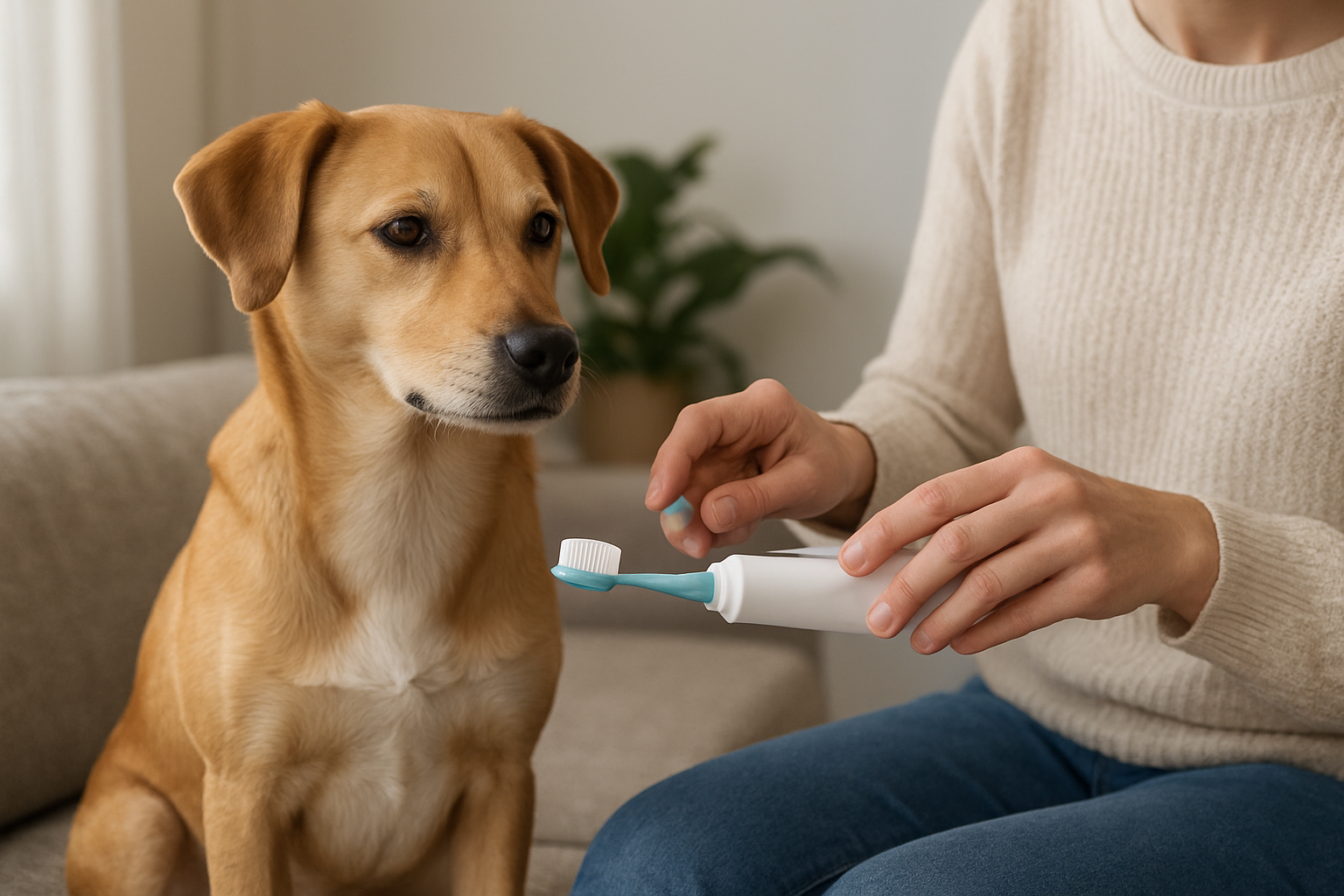
You need only a few items, but choosing them carefully makes the process easier. Use toothpaste made for dogs; human toothpaste may contain ingredients that are unsafe for pets, and dogs are not expected to rinse and spit.
| Item | What to look for | Warning sign |
|---|---|---|
| Dog toothpaste | Clearly labeled for dogs and suitable for regular use | Human toothpaste, baking soda, or an unlabeled homemade mixture |
| Toothbrush | Soft bristles and a head that fits comfortably in your dog’s mouth | Hard bristles, sharp edges, or a brush that makes you press forcefully |
| Reward | Small, familiar treats or praise your dog already enjoys | Large treats that prolong the session or upset the stomach |
| Towel or mat | A non-slip surface where your dog can stand or sit comfortably | A slippery floor or a position that makes your dog feel trapped |
A finger brush can be useful for some dogs, but it is not automatically safer or more effective. If your dog bites down, a finger brush can place your hand close to the teeth, so a long-handled, soft-bristled brush may give you better control. The Veterinary Oral Health Council’s accepted-products list is one place to compare dental products that have received its seal for specific plaque or tartar claims.
3. Teach your dog to accept mouth handling
Do not begin by immediately scrubbing every tooth. Break the behavior into small stages, and move forward only when your dog remains relaxed. Keep the first sessions short and finish before your dog becomes frustrated.
- Choose a quiet time. Work after a walk or calm play, not when your dog is hungry, excited, or ready to sleep.
- Touch the cheek. Stroke the side of the face, reward calm behavior, and release.
- Lift the lip briefly. Expose the outer teeth for one or two seconds, then reward.
- Rub one tooth with a clean finger. Use a gentle sideways motion on the outside surface.
- Introduce toothpaste. Place a tiny amount on your finger and allow your dog to taste it.
- Show the toothbrush. Let your dog sniff it, touch it, and receive a reward before you attempt brushing.
A useful checkpoint is simple: your dog should be able to accept the current stage without pulling away. If not, return to the previous step for several sessions. Some dogs progress in a few days, while others need several weeks.
4. Brush the teeth with a gentle technique
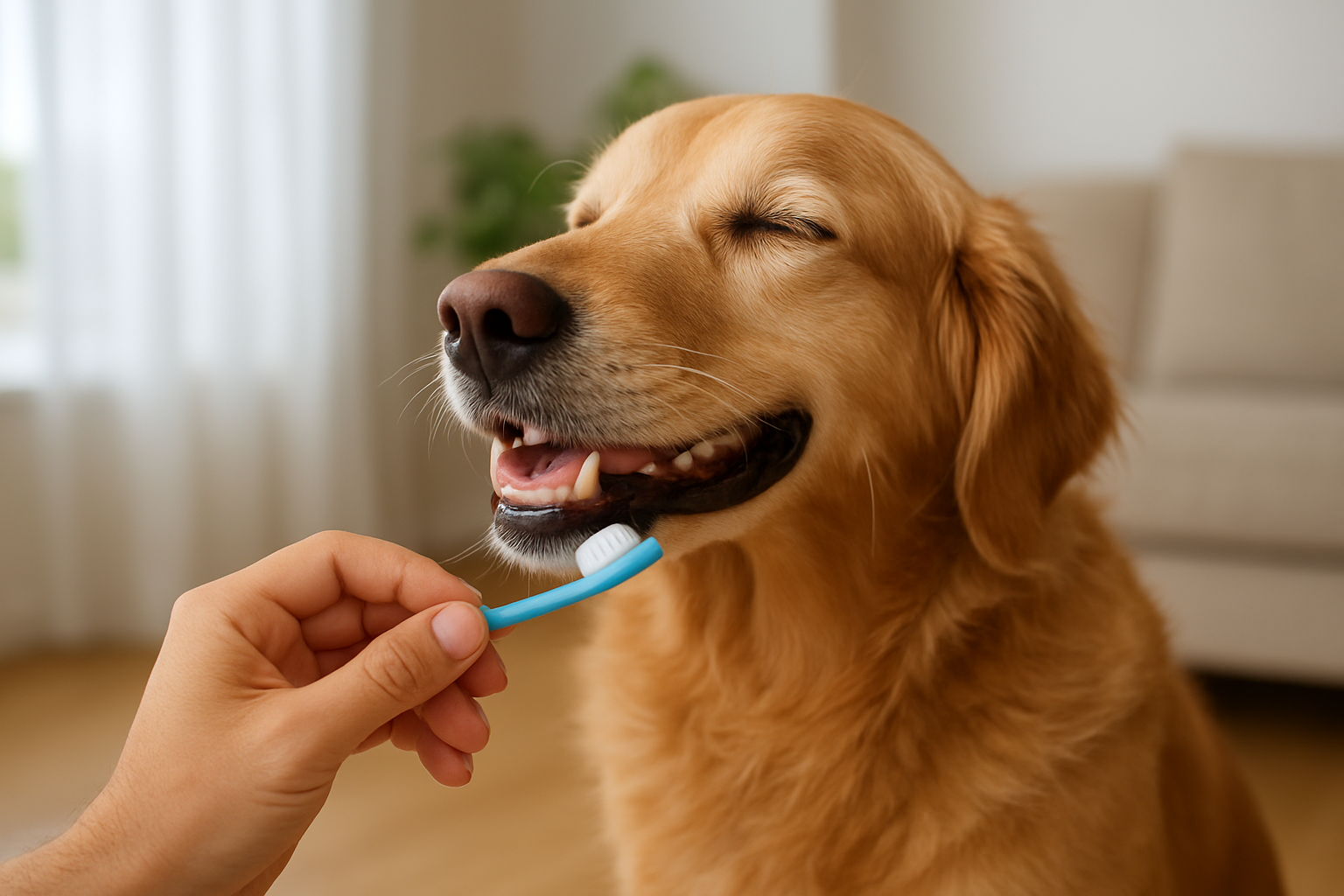
When your dog is ready, stand or kneel beside them rather than facing them directly. Lift the lip with one hand and hold the toothbrush at roughly a 45-degree angle toward the gumline. Focus on the outer surfaces first, because these are usually easiest to reach.
- Apply a small amount of dog toothpaste to the bristles.
- Start with two or three teeth near the canine tooth or cheek.
- Use small, gentle circles or short strokes along the gumline.
- Gradually include the upper back teeth, where plaque often collects.
- Brush the outer surfaces of the lower teeth once your dog is comfortable.
- Increase the number of teeth over several sessions rather than forcing a complete cleaning immediately.
You usually do not need to pry the jaws open during the early stages. Many dogs allow effective cleaning of the cheek-facing surfaces while keeping the mouth mostly closed. The VCA guide to brushing dogs’ teeth also recommends gradual introduction and attention to the areas that are easiest to access.
End with praise and a small reward. Rinsing is normally unnecessary when you use toothpaste designed for dogs, but follow the product label if it gives different instructions.
5. Build a routine that your dog can maintain
Daily brushing is the ideal target because plaque forms continuously, but consistency matters more than a perfect first attempt. If daily brushing is not yet realistic, begin with every other day and work toward more frequent sessions.
- Keep the toothbrush in the same easy-to-reach place.
- Use the same short cue, such as “teeth.”
- Brush at a predictable time of day.
- Keep sessions brief while your dog is learning.
- Replace the brush when the bristles become bent or worn.
Dental chews, diets, wipes, and water additives may complement brushing, but they should not be treated as automatic substitutes. If you use an additional product, check the label for your dog’s size and health needs, and consider products listed by the VOHC for the relevant claim.
6. Troubleshoot common problems
My dog chews the toothbrush
Allowing a little investigation is normal, but active chewing prevents controlled cleaning. Use less toothpaste, make the session shorter, and reward your dog for holding still while the brush touches the teeth. You can also practice with the brush handle nearby before putting it in the mouth.
My dog will not let me lift the lip
Return to cheek touches and rewards. Try approaching from the side, using a relaxed hand, and lifting the lip for less than one second. Do not chase your dog around the room with the toothbrush.
The gums bleed slightly
Stop if bleeding is more than a tiny spot, continues after you stop, or appears every time you brush. Inflamed gums may bleed easily, and your veterinarian should determine whether professional cleaning or treatment is needed.
Bad breath continues
Persistent odor can be a sign of dental disease even when the visible teeth look acceptable. Book a veterinary examination instead of masking the smell with treats or flavor additives.
7. Avoid these common mistakes
- Using human toothpaste, mouthwash, or baking soda
- Scrubbing hard enough to irritate the gums
- Trying to clean every tooth during the first session
- Forcing the mouth open or restraining the dog tightly
- Ignoring loose teeth, swelling, bleeding, or eating changes
- Assuming dental chews remove existing tartar
- Using very hard bones or objects that may fracture teeth; VCA specifically cautions that excessively hard chews can cause tooth fractures.
8. Use this practical checklist
- My dog has no obvious sign of painful dental disease.
- I have dog-safe toothpaste and a soft, suitable brush.
- My dog can tolerate cheek touches and brief lip lifting.
- I start with the outer tooth surfaces and use light pressure.
- I reward calm cooperation after every short session.
- I am increasing coverage gradually rather than forcing the process.
- I know which warning signs require a veterinary appointment.
9. Your next actions
Today, gather the supplies and reward your dog for allowing a brief cheek touch. Over the next few days, introduce the toothpaste and toothbrush separately. Once your dog stays relaxed, brush only a few outer teeth and gradually extend the session.
If your dog has heavy tartar, painful gums, a loose tooth, facial swelling, or ongoing bad breath, schedule a veterinary dental check before continuing. Home brushing is most useful as prevention and maintenance after your dog’s mouth is comfortable and healthy enough to handle it.
In short, learning how to brush a dog’s teeth at home is a training process as much as a cleaning task: use safe supplies, progress in small stages, brush gently and consistently, and involve your veterinarian when the mouth looks painful or abnormal.
For more calm, practical pet-care guidance, visit the LaokPet homepage or explore our guide on teaching a dog to settle on a mat.
Pingback: German Shepherd vs Belgian Malinois: Which Dog Is Better for Your Lifestyle? – LaokPet