The KONG Classic is a versatile stuffable dog toy for average chewers, especially dogs that enjoy chewing, licking, food puzzles, and unpredictable bounce. It is not indestructible, however, and choosing the correct size and supervising use are essential.
This KONG Classic Dog Toy review is based on the manufacturer’s current product information, sizing guidance, care instructions, and general pet-safety guidance. It explains what the toy does well, where its limits matter, and how to decide whether the red Classic—or a different option—fits your dog.
1. Understand what the KONG Classic is designed to do
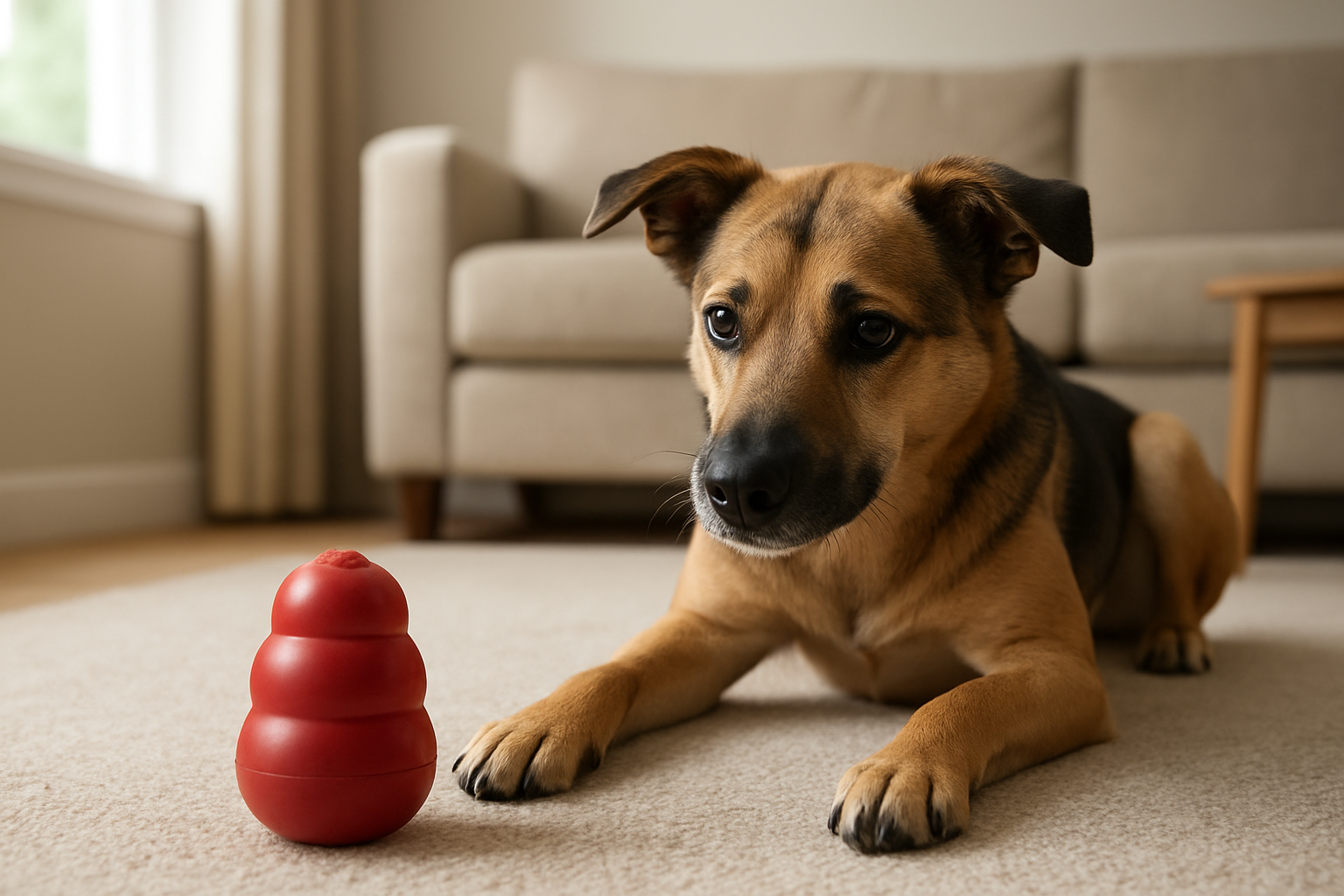
The KONG Classic is a hollow, snowman-shaped toy made from KONG’s red natural rubber formula. Its main functions are food dispensing, chewing, and play: you can fill the cavity with part of your dog’s meal, treats, or a suitable spread, while the irregular shape produces an unpredictable bounce.
KONG describes the red Classic rubber as intended for average chewers. That wording matters. “Durable” means the toy is designed to withstand substantial use, not that every dog will be unable to damage it. Teeth, jaw strength, chewing technique, and the toy’s size all affect longevity.
The product is available in multiple sizes, from Extra-Small to XX-Large. KONG’s published size ranges are based mainly on body weight, but the company also advises checking that the widest part of the toy is larger than the back of the dog’s mouth.
At a glance, here is how the main decision points compare:
| What to look for | Good match for the KONG Classic | Warning sign |
|---|---|---|
| Chewing style | Average chewing with occasional gnawing | Your dog quickly destroys thick rubber or hard toys |
| Age and mouth comfort | Adult dog with healthy teeth and gums | Young puppy or senior dog needs softer rubber |
| Play preference | Enjoys food puzzles, licking, chewing, or fetch | Only wants soft plush toys and ignores rubber |
| Size | Widest section is larger than the back of the mouth | Toy can fit deeply into the mouth or be swallowed |
| Supervision | You can inspect the toy during and after use | Dog is left alone with damaged rubber |
2. Match the rubber formula to your dog’s chewing style
Average chewers: the Classic’s intended audience
The red KONG Classic is most appropriate for adult dogs that chew regularly but do not routinely destroy robust toys. It can be especially useful for dogs that need a more productive activity during quiet time, crate training, or short periods when you are busy.
Food stuffing changes the experience. A completely empty toy may be uninteresting to some dogs, while a loosely filled toy can be solved quickly. Begin with easy-to-reach food, then gradually make the puzzle harder by packing the contents more firmly or freezing the filled toy.
Power chewers: consider the KONG Extreme
If your dog removes chunks from standard rubber toys, breaks plush toys within minutes, or applies intense pressure to every chew item, the Classic may not be the most economical choice. KONG identifies its black Extreme rubber as the stronger option for power chewers and recommends increasing size when appropriate.
Do not treat the Extreme as indestructible either. Any non-edible toy can become unsafe once it is cracked, split, or missing pieces. The right material reduces risk but does not remove the need for inspection.
Puppies and senior dogs may need a different formula
KONG’s Puppy line uses softer rubber for young dogs, while the Senior line is intended for older dogs with more sensitive teeth or gums. The Classic may be too firm for some puppies or seniors, even if the shape and filling concept are appealing.
For puppy-specific guidance, see our guide to safe puppy toys for teething and chewing. If your dog shows mouth pain, avoids chewing, drops food, or has bleeding gums, pause toy use and ask a veterinarian for advice.
3. Choose the size using weight and mouth safety
KONG’s current Classic sizing guide lists Extra-Small for dogs up to 5 pounds, Small up to 20 pounds, Medium for 15–35 pounds, Large for 30–65 pounds, Extra-Large for 60–90 pounds, and XX-Large for dogs weighing 85 pounds or more. These ranges overlap, so weight alone does not settle every choice.
When your dog falls between sizes, KONG advises sizing up. This is particularly important for powerful chewers and multi-dog households, where the toy should be sized for the largest dog. A larger toy also gives a strong chewer less leverage over the rubber.
- Compare your dog’s weight with the current manufacturer chart.
- Check the toy’s widest section against your dog’s mouth.
- Size up when uncertain rather than choosing the smaller option.
- Use the largest dog’s requirements if several dogs share toys.
- Replace the toy if it becomes small enough to lodge in the mouth.
For the most reliable product-specific measurements, consult the official KONG Classic product page rather than relying only on a retailer photograph.
4. Use food stuffing to make the toy more useful
The Classic’s hollow center is its biggest functional advantage. You can start with your dog’s normal kibble, then add a small amount of wet food, plain yogurt, pumpkin, mashed banana, or a dog-safe spread. Introduce new foods gradually and account for the calories in treats and fillings.
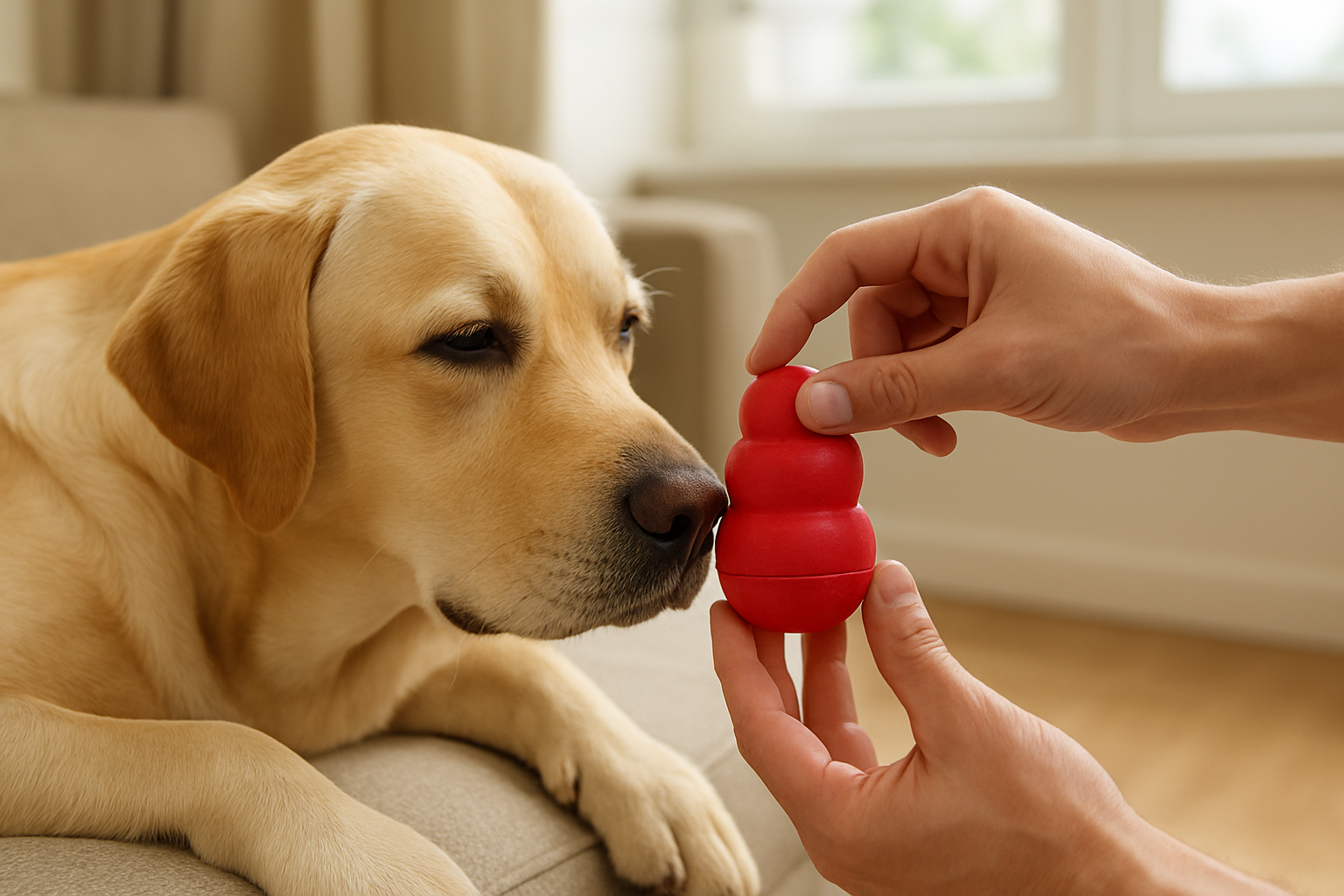
Never use ingredients containing xylitol, and avoid toxic foods such as chocolate, grapes, raisins, onions, and garlic. KONG’s own guidance also recommends checking ingredients carefully when using peanut butter or other prepared foods.
For an easy progression:
- Place a few pieces of kibble near the large opening.
- Add a soft food that your dog already tolerates.
- Seal the opening with a small amount of suitable food.
- Freeze the filled toy if your dog finishes it too quickly.
- Wash the toy after use so food does not remain trapped inside.
Food puzzles should complement, not replace, your dog’s full feeding plan. If your dog has allergies, digestive disease, obesity, or a prescription diet, use approved foods and ask your veterinarian before adding new ingredients.
5. Check the practical strengths and limitations
Strengths
- Multiple uses: It combines chewing, licking, food enrichment, and fetch in one compact toy.
- Adjustable difficulty: Loose kibble is easier, while packed or frozen food takes longer.
- Reusable design: The same toy can be filled repeatedly instead of discarded after one treat.
- Easy-care material: KONG says most rubber toys are top-rack dishwasher safe, although hand washing is also suitable.
- Broad size range: The Classic is offered for very small through very large dogs.
Limitations
- Not ideal for every chewer: Power chewers may damage the red rubber faster than expected.
- Some dogs need teaching: A dog unfamiliar with food toys may ignore an empty or difficult KONG.
- Cleaning can require effort: Sticky food may remain in the narrow interior without a bottle brush.
- It can add calories: Frequent high-calorie fillings may undermine weight-control goals.
- It is not a substitute for exercise: Food enrichment helps occupy a dog but does not replace walks, training, or social interaction.
For cleaning, KONG recommends warm water, soap, and a bottle brush, with top-rack dishwasher cleaning for stubborn residue. The company advises skipping heated drying and avoiding bleach or harsh chemicals because natural rubber can absorb liquids.
6. Compare alternatives before buying
The KONG Classic is a strong general-purpose choice, but it is not automatically the best toy for every dog. Consider these alternatives:
- KONG Puppy: Better suited to young puppies needing softer rubber.
- KONG Senior: Worth considering for older dogs with sensitive teeth or gums.
- KONG Extreme: A more appropriate starting point for established power chewers.
- Food puzzle feeders: Better if your main goal is meal enrichment rather than chewing.
- Fetch toys: Better for dogs that prefer active retrieving and do not engage with food toys.
If your dog is still learning basic manners, you may also find our guide on stopping a puppy from jumping on people useful. Toys work best alongside consistent training, not as a replacement for it.
7. Follow this safety checklist
- Remove packaging before giving the toy to your dog.
- Supervise the first several sessions.
- Inspect the rubber before and after use.
- Remove the toy if it has cracks, tears, deep gouges, or missing pieces.
- Use the correct size, especially in homes with multiple dogs.
- Keep fillings nutritionally appropriate for your dog.
- Wash and dry the toy thoroughly before refilling.
- Contact a veterinarian promptly if your dog may have swallowed rubber or develops vomiting, abdominal pain, loss of appetite, lethargy, or difficulty passing stool.
The manufacturer’s own warning is straightforward: supervised use is required, and the toy should be removed if damaged. General guidance from the FDA on pet hazards and swallowed objects also supports taking possible toy ingestion seriously.
Common mistakes to avoid
- Buying by breed alone: Individual mouth size and chewing style vary widely within a breed.
- Choosing the smallest possible size: A smaller toy may be easier to carry but can create a greater safety concern.
- Using the Classic for a known power chewer: Start with a stronger formula instead of waiting for repeated damage.
- Making the first filling too difficult: Begin with accessible food so your dog learns how the toy works.
- Leaving a damaged toy available: Durability is not a permanent guarantee.
- Ignoring the calories: Treats and spreads should be deducted from the daily food allowance.
What if your dog will not use the KONG Classic?
Try making the toy easier. Put a few favorite kibble pieces at the opening, use a familiar food, and offer it during a calm period rather than when your dog is already overstimulated. You can also place the toy on a washable mat to make the activity less frustrating.
If your dog still refuses it, the issue may be texture, hardness, shape, or lack of interest in food puzzles. Test a softer KONG formula, a different puzzle design, or a simple interactive game. Do not force the toy into your dog’s mouth.
Next actions before you buy
- Classify your dog as a light, average, or power chewer.
- Check age, dental comfort, and whether softer rubber is more suitable.
- Measure weight and confirm the toy will be wider than the back of the mouth.
- Choose the filling using your dog’s normal diet and calorie needs.
- Plan supervised introduction, cleaning, and regular inspections.
Final verdict: is the KONG Classic worth buying?
The KONG Classic is worth considering if you want a reusable, stuffable enrichment toy for an adult average chewer. Its strongest feature is flexibility: the same red rubber toy can support chewing, licking, meal enrichment, and short fetch games, with difficulty adjusted through the filling.
It is a less suitable choice for puppies with sensitive developing teeth, seniors with dental discomfort, or dogs that routinely destroy standard rubber toys. In those cases, choose the softer or stronger KONG formula that matches the dog’s life stage and chewing behavior. The best KONG Classic purchase is therefore conditional: select the correct size, supervise every session, and treat the toy as durable—not indestructible.