To stop a puppy from jumping on people, remove attention when the puppy jumps and immediately reward calm behavior, such as standing with four paws on the floor or sitting. The key is to teach your puppy what to do instead of jumping and make sure every person follows the same greeting rule.
Puppies often jump because excitement brings attention, touch, eye contact, or play. This guide will help you prepare the environment, teach a replacement behavior, handle visitors, and troubleshoot setbacks without turning greetings into a stressful confrontation.
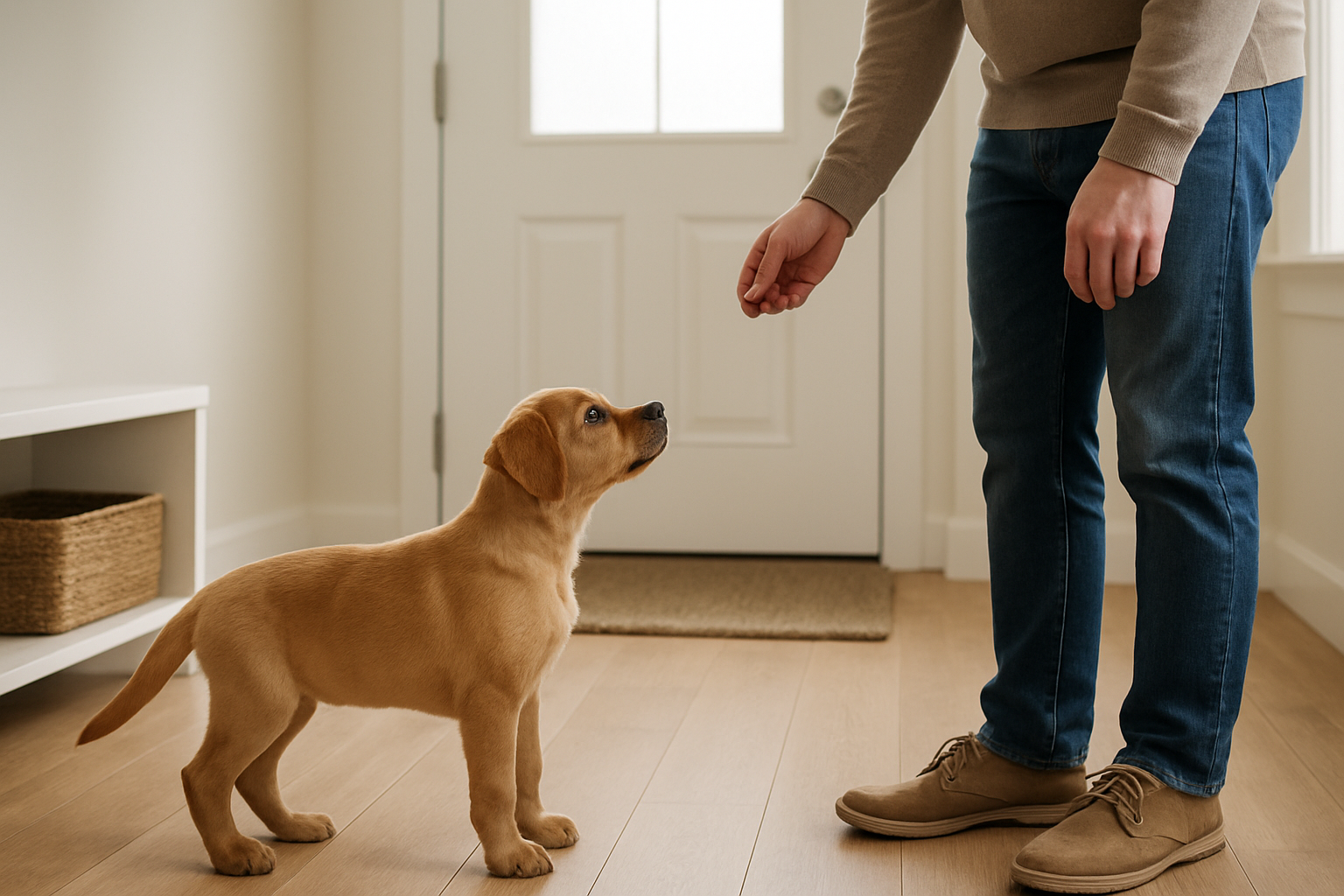
1. Prepare the training setup before greetings
Training is easier when your puppy cannot repeatedly practice jumping. Before visitors arrive, place small treats near the entryway, clear anything the puppy could knock over, and decide where the puppy should wait during the first few minutes of a greeting.
- Use a lightweight leash for controlled practice, if your puppy is comfortable wearing one.
- Keep treats in a pouch or container that is easy to reach.
- Use a baby gate, exercise pen, crate, or mat when the puppy is too excited to respond.
- Ask household members and visitors to use the same greeting rule.
Management is not a replacement for training. It prevents mistakes while your puppy is learning and reduces the chance that jumping becomes a reliable way to get attention. The American Kennel Club’s training guidance also emphasizes managing the environment and rewarding behaviors you want repeated.
2. Choose one calm greeting behavior
Decide what your puppy should do instead of jumping. A sit is a useful option because the puppy cannot sit and jump at the same time, but standing quietly with four paws on the floor can also work, especially for a very young puppy.
Use one short cue, such as “sit” or “four paws,” and avoid changing the rule from person to person. Your puppy does not need a perfect formal position at first. The immediate goal is simply to create a calm, repeatable greeting.
Practice away from the front door first. Say the cue, wait for the correct behavior, and deliver a small treat close to the puppy’s nose level. If the puppy becomes too excited, pause, create more distance, and try again with less stimulation.
3. Teach that jumping makes attention disappear
When your puppy jumps, do not push, grab, scold, or repeatedly say “down.” Touch and verbal reactions can still feel like attention, which may encourage the puppy to continue. Instead, calmly turn your body away, fold your arms, or step out of reach.
The moment all four paws are on the floor, turn back and reward the puppy. You can use a treat, quiet praise, or gentle petting if petting does not trigger another jump. The timing matters: reward the calm behavior immediately rather than waiting several seconds.
This approach is consistent with reward-based training recommendations from the American Veterinary Society of Animal Behavior. Its guidance describes withdrawing attention for jumping while reinforcing an appropriate behavior such as sitting.
Training checkpoint
After several short repetitions, your puppy should begin to notice that jumping pauses the interaction while calm behavior brings it back. If the puppy becomes frantic, stop the exercise and lower the difficulty rather than repeating the same failed greeting.
4. Practice the greeting in small steps
Do not begin with an exciting visitor entering quickly while carrying bags. Build the skill gradually so your puppy can succeed.
- Stand several feet away from your puppy.
- Take one step toward the puppy.
- If four paws stay down, mark the behavior with “yes” and give a treat.
- If the puppy jumps, turn away and wait silently.
- Repeat until you can approach without triggering a jump.
- Add the doorbell, knocking, movement, or a familiar visitor one element at a time.
Keep sessions brief. A few successful repetitions are more useful than a long session that ends with your puppy overtired and jumping repeatedly. End while the puppy can still respond to the cue.
For puppies that need something appropriate to hold or chew after greeting practice, LaokPet’s guide to safe puppy toys for teething and chewing may help you plan a calmer post-greeting routine.
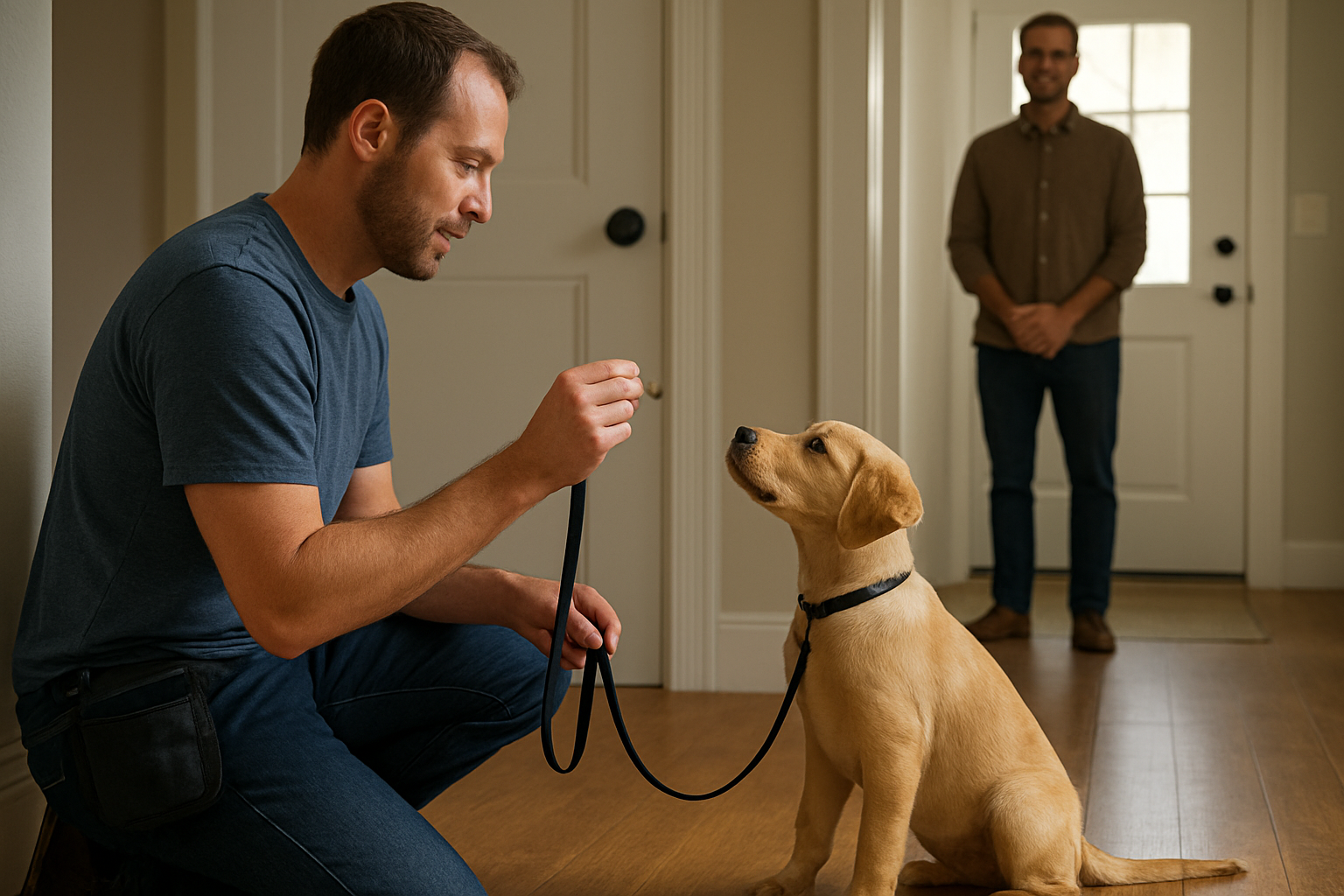
Use this comparison table to decide how much help your puppy needs during practice.
| Situation | What to look for | Warning sign | Best adjustment |
|---|---|---|---|
| Quiet family member approaches | Puppy can take a treat and keep paws down | Repeated jumping before the person reaches the puppy | Increase distance and slow the approach |
| Visitor enters the home | Puppy responds to a cue or looks toward the handler | Barking, spinning, lunging, or ignoring food | Use a gate or separate room until arousal drops |
| Greeting outdoors | Puppy can briefly focus despite distractions | Leash pulling and jumping at every passerby | Move farther away and reward calm observation |
| Children are present | Adults can control the setup and supervise closely | Puppy knocks into, mouths, or corners a child | Separate puppy and child and involve a qualified trainer |
5. Make visitors part of the training plan
Visitors should ignore the puppy until the puppy is calm. Ask them not to bend over, wave their hands, squeal, or offer attention while the puppy is jumping. Once the puppy has four paws on the floor, the visitor can calmly say hello and offer a treat low to the ground.
If the puppy jumps again, the visitor should immediately turn away or step behind the gate. You may need to hold the leash or guide the puppy to a mat. Avoid dragging the puppy toward the visitor; create space and wait for a calmer response.
Consistency is essential. If one person rewards jumping while everyone else ignores it, the behavior may continue because the occasional reward can be highly motivating. The AKC’s greeting guidance recommends removing attention when jumping occurs and rewarding the preferred greeting behavior.
6. Troubleshoot the most common setbacks
What if ignoring the puppy makes jumping worse?
Jumping may briefly increase when attention stops. This does not mean the plan is failing, but it does mean you must avoid rewarding the stronger attempt. Turn away calmly, use a gate if needed, and reward the first quiet pause.
What if the puppy jumps only on certain people?
Those people may move faster, speak more loudly, or have previously rewarded jumping. Start with a calm familiar person and gradually work toward more exciting greetings. Ask the difficult visitor to remain still and follow the same rules.
What if the puppy cannot focus at the door?
The doorway may be too stimulating. Begin in a quiet room, then practice near the entryway without opening the door. Use a barrier during real arrivals until the puppy can respond more reliably.
What if the puppy jumps and mouths clothing?
Turn away and end the interaction. Keep hands still rather than playing a pushing game, and provide a suitable chew or toy once the puppy is calm. If the behavior is painful, frequent, or difficult to manage, seek help from a qualified reward-based trainer or veterinary behavior professional.
7. Avoid these common mistakes
- Repeating the cue: Saying “sit” many times teaches the puppy to wait through the first requests.
- Pushing the puppy down: Physical contact may become part of an exciting game.
- Rewarding too late: Waiting until the puppy has jumped again makes the desired behavior unclear.
- Allowing occasional jumping: Inconsistent rules make the behavior harder to change.
- Training only when guests arrive: Practice calm greetings during quiet daily moments too.
- Expecting instant reliability: Excitement, age, fatigue, and distractions all affect performance.
8. Advanced tips for busy homes and large puppies
For a large or powerful puppy, use management early because even friendly jumping can knock someone over. Teach the puppy to go to a mat while a visitor enters, then release the puppy for a calm greeting only when the body is relaxed.
Vary the rewards once the behavior improves. You might use food for difficult greetings, praise for easy ones, and access to the visitor as the reward when your puppy remains calm. Continue rewarding often enough that the greeting rule remains worthwhile.
Exercise and sleep also matter. A puppy that is overtired or highly aroused may have less self-control, so schedule practice after a bathroom break and a short period of calm activity rather than after intense play.
Action checklist for the next greeting
- Put treats near the entrance.
- Choose “sit” or “four paws on the floor” as the greeting behavior.
- Use a leash, gate, pen, or mat if necessary.
- Tell the visitor to ignore jumping.
- Reward calm behavior immediately.
- End the greeting or add distance if the puppy becomes too excited.
- Repeat short practice sessions every day.
Next actions
Today, practice five calm approaches with one familiar person in a quiet room. Tomorrow, repeat near the entryway, then add a gentle knock or doorbell only when your puppy can succeed at the easier stage.
If your puppy continues to jump aggressively, knocks people down, guards access to visitors, or cannot settle despite careful management, contact your veterinarian and ask for a referral to a qualified reward-based trainer or veterinary behavior professional. Start with the simplest version of the greeting rule, apply it consistently, and build difficulty gradually; that is the most reliable way to stop a puppy from jumping on people.