To bathe a cat without getting scratched, prepare everything first, trim sharp claw tips if your cat allows it, use shallow lukewarm water, keep movements slow, and stop before your cat becomes frantic. Most cats do not need routine baths, so the safest approach is to use a damp cloth or brushing when that is enough. This guide explains when a bath is justified, how to set up the process, and how to protect both you and your cat.
1. Decide whether your cat really needs a bath
Bathing should solve a specific problem rather than become a regular chore. Healthy cats usually keep themselves clean, and repeated bathing can remove natural oils from the coat. A soft damp cloth may be enough for a dirty paw, small stain, or dusty coat. Cats Protection explains when bathing is appropriate and why most cats do not need frequent washing. ([cats.org.uk](https://www.cats.org.uk/cats-blog/should-i-bathe-my-cat?utm_source=openai))
A bath may be necessary when your cat has a substance on the coat that cannot be safely removed by brushing or wiping, when a veterinarian has prescribed a medicated shampoo, or when long, dense fur is heavily soiled. If the coat contains paint, oil, cleaning chemicals, antifreeze, or another potentially toxic substance, call your veterinarian or an animal poison service for instructions before choosing a product.
Use an alternative first when possible
- Brush out loose dirt, litter, or small tangles.
- Wipe one area with a warm, damp cloth.
- Ask your veterinarian whether a specific shampoo or professional groomer is needed.
2. Prepare the room and supplies before bringing in your cat
The less time your cat spends waiting beside running water, the calmer the bath is likely to be. Choose a warm, quiet room and close doors so your cat cannot escape halfway through the process.
- Cat-specific shampoo recommended for your cat’s coat or medical condition
- Two or three large, dry towels
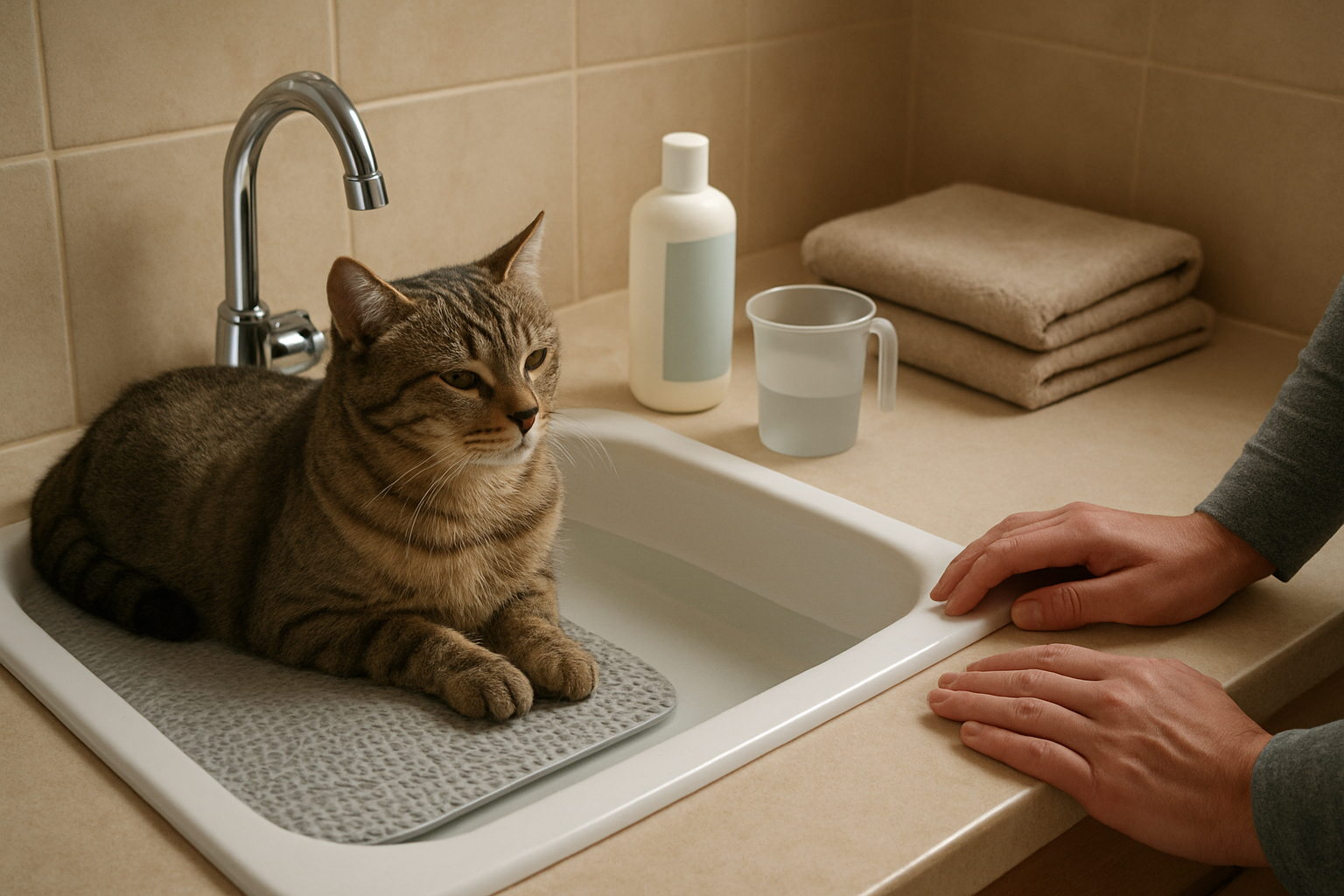
- A rubber mat or folded towel for the bottom of the sink or tub
- A plastic cup or small pitcher for rinsing
- A soft washcloth for the face
- A brush or wide-toothed comb, if appropriate for the coat
- A few high-value treats for before and after the bath
- Long sleeves and, if needed, sturdy clothing that protects your arms without restricting movement
Never improvise with human shampoo, baby shampoo, or dog flea products. Cats can be sensitive to fragrances and other ingredients, and some dog products contain substances that are toxic to cats. The VCA guide to feline coat care recommends products formulated specifically for cats and notes that human shampoo is too harsh for feline skin. ([vcahospitals.com](https://vcahospitals.com/flannery/know-your-pet/grooming-and-coat-care-for-your-cat?utm_source=openai))
3. Reduce the chance of scratching before the bath
Choose a time when your cat is naturally relaxed, such as after a quiet play session or meal. Avoid chasing your cat around the house, because the chase can raise fear before the bath even begins.
If your cat calmly accepts paw handling, trim only the sharp tips of the claws beforehand. Do not attempt a nail trim if your cat struggles; a frightened cat may associate the entire grooming routine with restraint. Brushing out mats before wetting the coat is also important because water can tighten mats and make them more uncomfortable.
Keep your cat’s body supported rather than holding only the scruff or gripping the legs. A secure, calm hold gives your cat fewer reasons to twist and grab at you. If another adult is available, one person can support the cat while the other handles the cup, shampoo, and towels.
4. Set up shallow, lukewarm water
Put the non-slip mat in the sink or tub and add only a few inches of lukewarm water. The water should not be hot, cold, or deep enough to cover your cat’s chest. Turn off the tap before bringing your cat into the room if running water makes them nervous.
Test the temperature with your wrist. A cup is often less alarming than a spray hose, and it gives you better control over where the water goes. Keep the cat’s head, nose, eyes, and ears above the water throughout the bath.
Use this quick safety check before you begin:
| What to look for | Warning sign | What to do |
|---|---|---|
| Non-slip footing | Paws slide or scramble | Add a rubber mat or folded towel |
| Lukewarm water | Water feels hot or cold on your wrist | Adjust it before bringing in the cat |
| Calm body language | Flattened ears, growling, rapid swishing tail | Pause and reduce handling |
| Easy rinsing | Shampoo or supplies are out of reach | Stop and reposition them before starting |
| Safe drying area | Cold floor, open window, or strong draft | Prepare a warm, quiet room first |
5. Bathe your cat with controlled, low-stress movements
Wet the body gradually
Place your cat in the shallow water with one hand supporting the chest and the other supporting the hindquarters. Speak quietly and wet the body from the shoulders toward the tail using a cup or damp washcloth. Avoid pouring water over the head.
Apply a small amount of cat shampoo
Use only the amount directed on the label or by your veterinarian. Massage it gently in the direction of hair growth, beginning with the back and sides. Keep your hands away from the face, and do not scrub forcefully around sensitive areas.
Clean the face separately
Use a clean, damp washcloth for the face. Plain water is usually the safest option unless your veterinarian has instructed you to use a particular product. Wipe around the cheeks and forehead while avoiding the eyes, nostrils, and ear canals.
Rinse more thoroughly than you think you need to
Use several cups of clean lukewarm water until the coat no longer feels slippery. Shampoo residue can irritate the skin, and your cat will probably groom immediately after the bath. The ASPCA’s cat grooming guidance also recommends careful rinsing and towel drying in a warm, draft-free place. ([aspca.org](https://www.aspca.org/pet-care/cat-care/cat-grooming-tips?utm_source=openai))
6. Dry your cat and end the session quickly
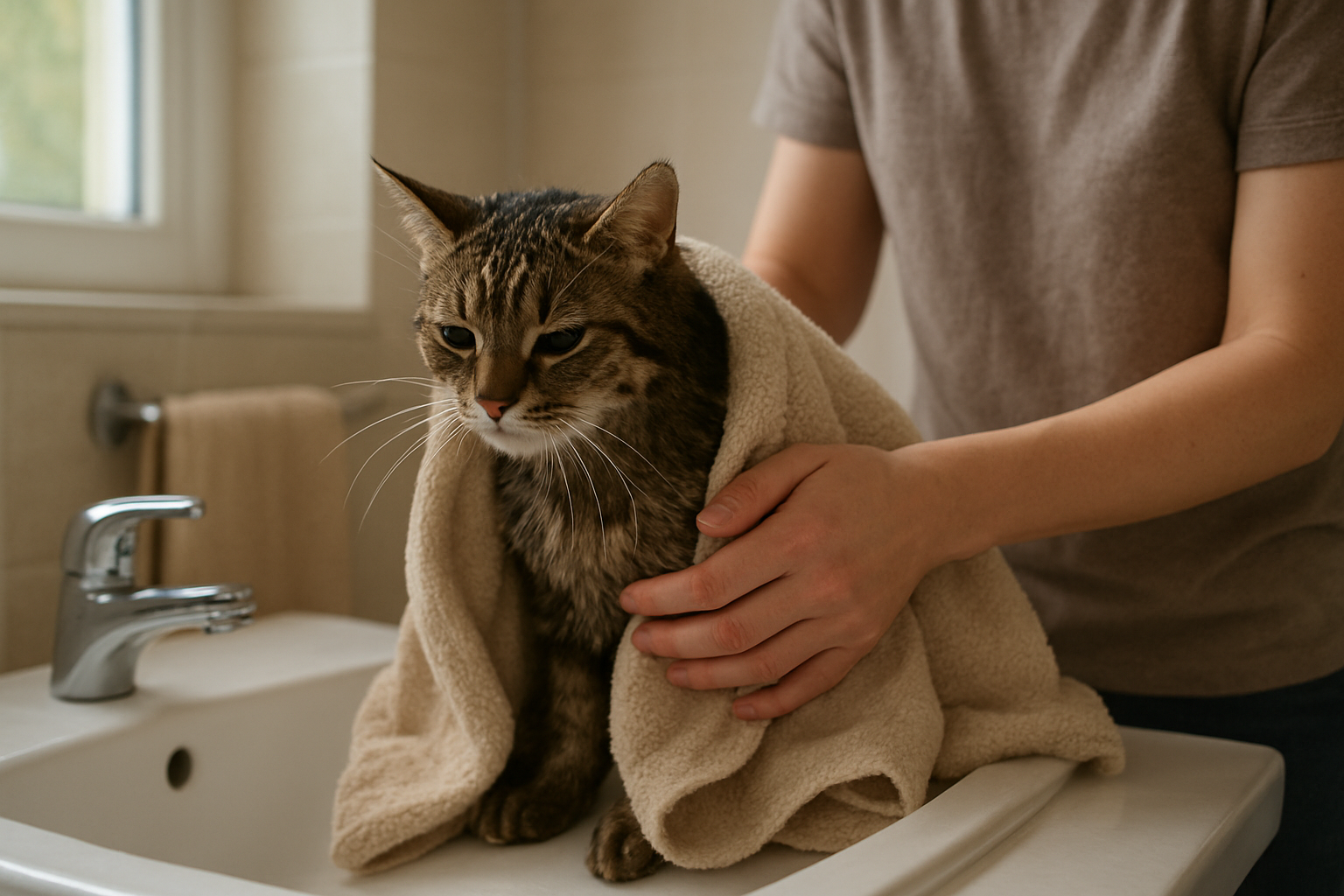
Lift your cat onto a dry towel and wrap the body gently, leaving the head uncovered. Pat rather than vigorously rub, especially if the coat is long or tangled. Replace the towel when it becomes wet.
Keep your cat in a warm, draft-free room until the coat is mostly dry. A hair dryer can frighten some cats and may overheat the skin, so use it only if your cat already tolerates the sound and only on the lowest, coolest setting. Never leave a wet cat outdoors or in a cold room.
Offer a treat, quiet praise, and a chance to retreat. Do not force additional brushing immediately if your cat is tired or upset. A short, calm ending is more useful than trying to make the coat perfect in one session.
7. Know when to stop or ask for professional help
Stop if your cat repeatedly attempts to bite, thrashes hard, pants, becomes rigid, or cannot keep their footing. Do not pin the cat down, force the head under water, or continue after a serious escalation in fear.
If your cat fights grooming and there is a realistic risk of injury, a professional groomer or veterinarian is the safer choice. The ASPCA advises professional help when grooming may injure the cat or owner. ([aspca.org](https://www.aspca.org/pet-care/cat-care/cat-grooming-tips?utm_source=openai)) A veterinary clinic may also be appropriate when the bath is needed for a medical condition, toxic exposure, severe matting, or painful skin.
Common mistakes that lead to scratches
- Starting without having towels, shampoo, or rinse water ready.
- Using a deep tub or slippery bare surface.
- Turning on a loud spray directly beside the cat.
- Wetting the face or pouring water over the head.
- Using human shampoo, dog shampoo, essential oils, or household cleaners.
- Holding the cat more tightly as fear increases instead of pausing.
- Trying to remove tight mats with scissors at home.
- Bathing a kitten, elderly cat, or sick cat without veterinary guidance.
What if your cat still will not tolerate a bath?
If the dirt is localized, return to a damp cloth and gentle brushing. If your cat needs repeated medicated baths, ask your veterinarian whether the treatment can be adapted, demonstrated, or handled at the clinic.
For chemical contamination, do not use solvents or random cleaning products on the coat. The VCA toxic-hazard guidance explains that contaminated fur may need prompt washing, but veterinary advice is important when the substance is unknown or the cat cannot be safely handled. ([vcahospitals.com](https://vcahospitals.com/greater-savannah/know-your-pet/household-hazards-toxic-hazards-for-cats?utm_source=openai))
Bath-time checklist
- Confirm that a bath is actually needed.
- Brush the coat and remove loose mats first.
- Prepare shallow lukewarm water and a non-slip surface.
- Use only a cat-specific product or one prescribed by your veterinarian.
- Keep the face out of the water and clean it with a damp cloth.
- Rinse until no slippery residue remains.
- Dry the cat completely in a warm, draft-free room.
- Stop immediately if handling becomes unsafe.
Next actions for a safer future bath
Before the next bath, practice touching your cat’s paws, shoulders, and sides for a few seconds while offering treats. Place the empty sink mat nearby so it becomes familiar, then gradually introduce the sound of a cup being filled away from your cat.
The goal is not to make every cat enjoy water. It is to keep the cleaning task brief, controlled, and safe. When you prepare properly and recognize the point at which home bathing is no longer suitable, you have the best chance of cleaning your cat without getting scratched.