The best heated cat beds for winter provide gentle, even warmth while allowing your cat to leave easily. For many cats, a self-warming or well-insulated bed is enough; electric models make more sense for older, thin, hairless, or cold-sensitive cats when safety features and supervision are taken seriously.
Winter bedding is not simply about choosing the warmest product. You also need to consider your cat’s age, health, sleeping habits, coat, access to the bed, and whether the bed will be used indoors or in an outdoor shelter. This guide explains what to compare, what to avoid, and how to decide whether heated bedding is appropriate for your home.
1. Decide whether your cat actually needs a heated bed
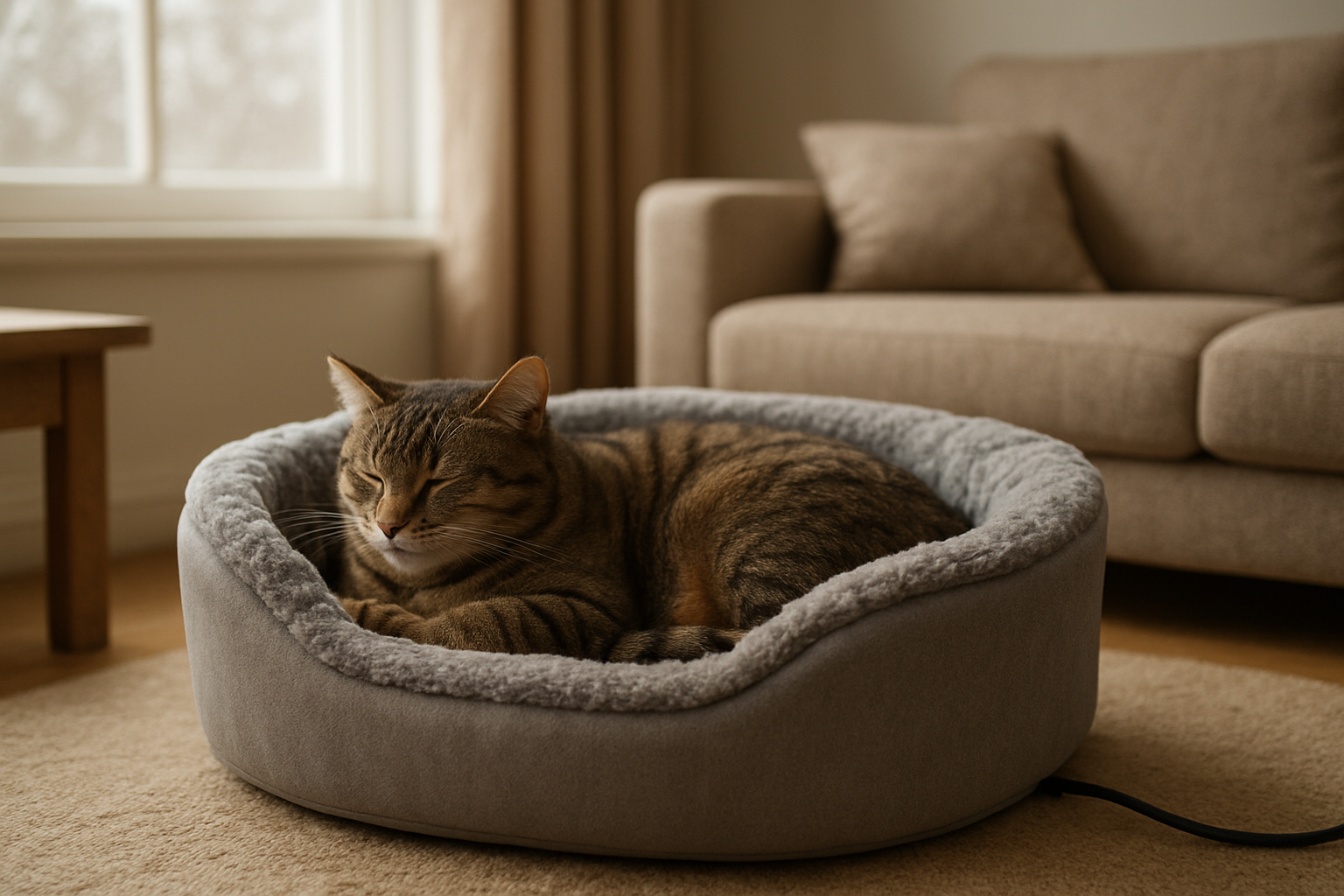
A heated cat bed can be useful, but it is not automatically better than a normal bed. Most healthy indoor cats can stay comfortable with a warm room, a padded bed, and protection from drafts. A heated option becomes more useful when your cat repeatedly seeks heat, sleeps in a cold room, or has difficulty maintaining body warmth.
Older cats, kittens, hairless cats, very lean cats, and cats with some medical conditions may be more sensitive to cold. However, unusual cold-seeking, lethargy, weakness, poor appetite, or shivering should not be treated as a bedding problem alone. These signs can indicate illness and deserve veterinary advice.
Veterinary guidance also warns that ordinary heating pads can become hot enough to burn a sleeping pet. VCA’s heating-pad safety guidance recommends avoiding direct contact, preventing confinement, and supervising use when heat is necessary.
2. Choose between electric, self-warming, and insulated beds
Electric heated beds
Electric beds use a heating element to provide steady warmth. They are usually the strongest choice for a genuinely cold room or a cat that benefits from consistent low heat, provided the model is designed for pets and used according to its instructions.
- Look for low, regulated heat rather than a very hot surface.
- Prefer models with protected wiring and a cord designed to resist chewing.
- Make sure the cat can lie partly on and partly off the heated area.
- Use the bed on a dry, stable surface away from water bowls and heaters.
Self-warming beds
Self-warming beds use insulating materials or reflective layers to retain some of the cat’s body heat. They do not need electricity, so they avoid cord-chewing and some overheating concerns. They are a practical first choice for cats that need a little extra comfort but do not require active heating.
Insulated or covered beds
A cave-style bed, thick bolster bed, or fleece-lined nest can reduce drafts and help a cat retain body heat. This may be the best solution for a healthy cat in a normally heated home. It is also useful as a backup if power fails.
For general winter care, the ASPCA recommends a warm sleeping area raised from cold floors and protected from drafts. That advice applies whether the bed is electric or not.
3. Compare the safety features that matter most
Product names and attractive shapes are less important than construction. Before buying, inspect the specifications and return policy rather than assuming that every “heated” pet bed has the same protections.
Use this comparison as a screening tool:
| What to look for | Why it matters | Warning sign |
|---|---|---|
| Low, controlled temperature | Reduces the chance of overheating during long naps | No temperature information or unusually hot surface |
| Protected internal heating element | Helps prevent damage from claws, movement, and normal use | Heating component is exposed or poorly enclosed |
| Chew-resistant cord | Limits the risk of electrical injury | Thin, easy-to-reach cable |
| Washable removable cover | Makes regular cleaning practical | Cover cannot be removed or care instructions are unclear |
| Firm, non-slip base | Prevents sliding when your cat enters or exits | Bed folds, tips, or moves easily |
| Unheated escape area | Lets your cat regulate comfort by changing position | The entire sleeping surface is heated with no cooler section |
Do not use a household electric blanket, damaged heating pad, or improvised warming device as a substitute for a pet-specific product. Cords should be inspected regularly, especially if your cat likes to chew or scratch bedding.
4. Match the bed to your cat’s body and habits
A bed that is technically warm may still fail if your cat cannot settle comfortably in it. Measure your cat while lying down and allow enough room to stretch, turn, or change position. Cats that curl up may prefer a snug nest, while large cats or cats with joint stiffness often need a flatter, more open surface.
- For senior or arthritic cats: choose a low-entry bed with firm support and avoid high sides that require climbing.
- For hairless cats: consider gentle warmth, soft washable fabric, and close monitoring of skin contact.
- For nervous cats: choose a quiet bed with an open exit rather than a deep enclosure that could feel confining.
- For cats that knead: avoid loose fabric, exposed seams, or easily pulled heating components.
- For multi-cat homes: provide more than one resting option so cats are not forced to share a heated space.
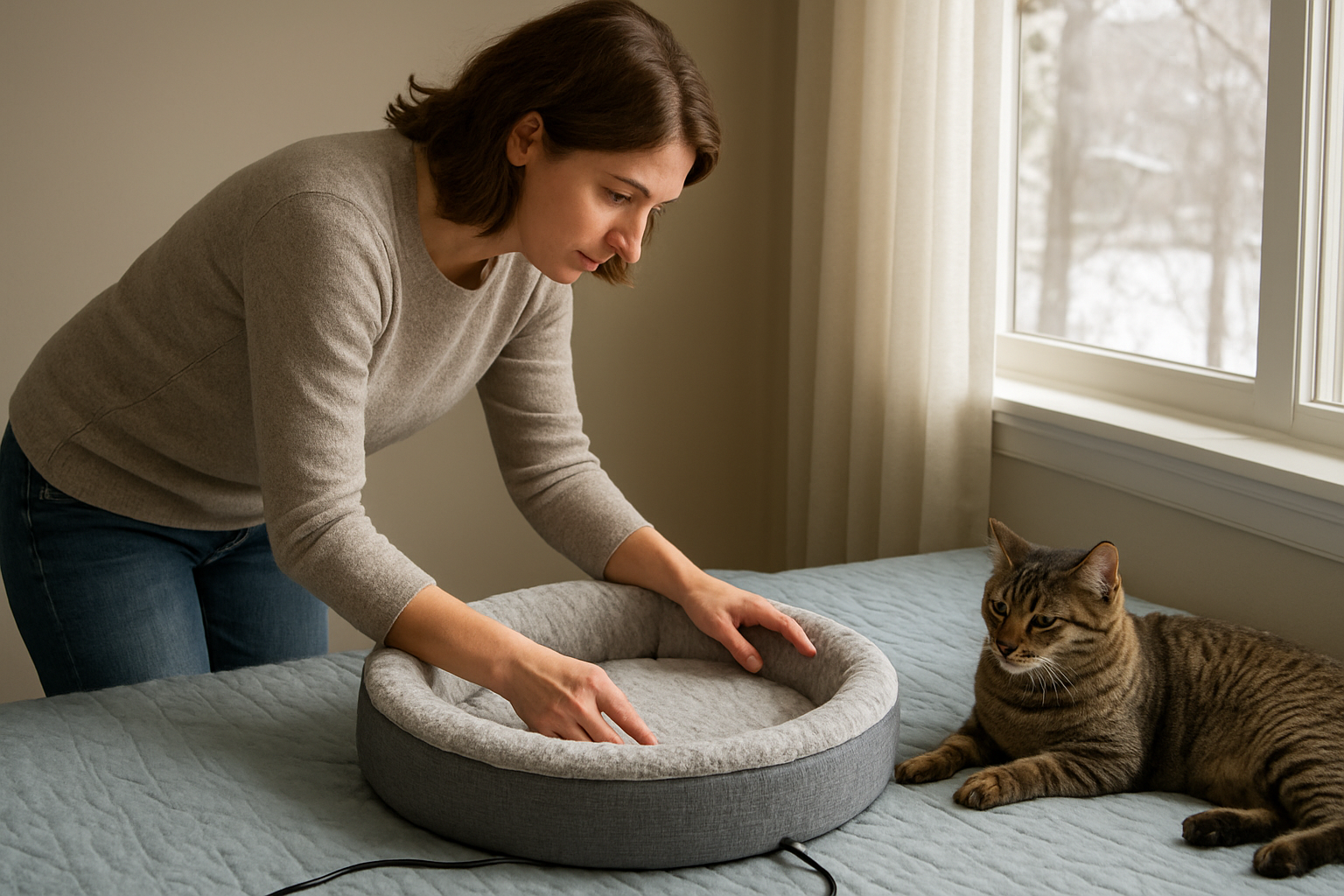
Some cats reject unfamiliar beds at first. Place the new bed near an existing favorite sleeping spot and add a familiar blanket. Avoid forcing your cat into it.
5. Place the heated cat bed safely
Location affects both comfort and risk. Put the bed in a dry area away from open flames, radiators, direct sun, busy walkways, and places where the cord can be pulled or trapped. A quiet corner near a window may work well if the surface does not become excessively hot.
Your cat should always be able to leave the bed without jumping over barriers or becoming trapped beneath blankets. Do not place a heated bed inside a carrier, closed crate, or tightly enclosed shelter unless the manufacturer specifically permits that use and you can monitor the temperature.
For outdoor or community cats, an indoor room is safer whenever possible. If outdoor shelter is unavoidable, the shelter must stay dry, insulated, and protected from wind, and the heating equipment must be specifically designed for that environment. A normal indoor heated bed should not automatically be treated as outdoor-safe.
6. Use a simple safety routine
Read the instructions before the first use and check the bed regularly. Even a well-designed product can become unsafe if the cover is torn, the cord is damaged, or moisture reaches the electrical components.
- Set the bed on a flat, dry surface.
- Inspect the cord, plug, cover, and seams.
- Test the warmth with your hand before allowing use.
- Keep part of the bed unheated or provide a nearby cooler bed.
- Watch your cat during the first several sessions.
- Unplug the bed when the instructions require it or when you cannot safely monitor it.
Stop using the bed if you notice a hot spot, discoloration, unusual odor, frayed wiring, dampness, or a cat that avoids the bed after previously using it. Never cover a heating surface with thick layers that could trap heat unless the manufacturer specifically instructs you to do so.
7. Avoid these common buying mistakes
- Choosing maximum heat: More heat is not automatically more comfortable or safer.
- Ignoring escape access: A cat must be able to move away from warmth whenever it wants.
- Buying for a kitten without supervision: Young cats may chew cords or fail to move away when uncomfortable.
- Forgetting cleaning: A non-washable bed can quickly become impractical, particularly for cats with shedding, accidents, or skin problems.
- Using a human heating pad: Household products may not be designed for unattended animal use.
- Assuming warmth treats illness: A heated bed can improve comfort but cannot diagnose or manage an underlying condition.
8. What if your cat will not use the bed?
First, check whether the bed is too warm, noisy, unstable, strongly scented, or placed in a busy area. Turn off the heat temporarily if possible and let your cat investigate the bed as ordinary furniture. A familiar blanket or a small amount of bedding from a preferred sleeping area may make the transition easier.
If your cat continues to seek unusual amounts of heat, seems weak, loses weight, stops eating, or shows breathing or mobility changes, contact a veterinarian. Cold-related signs such as persistent shivering, lethargy, or a cat that feels unusually cold also require prompt attention rather than simply increasing the bed temperature. PetMD’s veterinary-reviewed winter guidance lists these signs and explains why vulnerable cats need extra protection.
9. Buying checklist and next actions
Before you order, confirm the following:
- The bed is the correct size for your cat’s sleeping position.
- The temperature is described as gentle, regulated, or low-warmth.
- The cord and heating element are protected.
- The cover can be removed and washed.
- Your cat can leave the warm area easily.
- The bed will be used only in the environment for which it was designed.
- You have a non-electric backup bed for power outages or maintenance.
Start by measuring your cat and identifying the coldest sleeping area in your home. Then compare a self-warming bed with a pet-specific electric model. If your home is already comfortable and your cat is healthy, the self-warming option may be the simpler choice. If your cat is older, thin, hairless, or consistently uncomfortable in a cool room, discuss the most suitable level of warmth with your veterinarian.
Final verdict: which heated cat bed is best for winter?
The best heated cat bed for winter is not necessarily the hottest or most expensive model. Choose a regulated, pet-specific design with protected wiring, washable materials, stable support, and an easy escape route. For many cats, a well-insulated self-warming bed is sufficient; electric warmth is most appropriate when your cat genuinely needs extra heat and you can use it safely.
Make comfort only one part of the decision. Safe placement, regular inspection, and attention to changes in your cat’s behavior matter just as much as the bed itself.