Quick verdict: An Exotic Shorthair is usually easier to groom than a Persian cat. Its short, dense coat needs less detangling and fewer lengthy brushing sessions. However, neither breed is completely low-maintenance: both may need face cleaning, nail care, routine brushing, and close attention to breathing, skin, and eye comfort.
Grooming difficulty matters because the right routine affects your cat’s comfort, your cleaning workload, and how easily you can spot skin or health changes. This comparison explains what each breed needs, where the real tradeoffs are, and which choice makes more sense for different households.
1. Compare the grooming work before choosing a breed
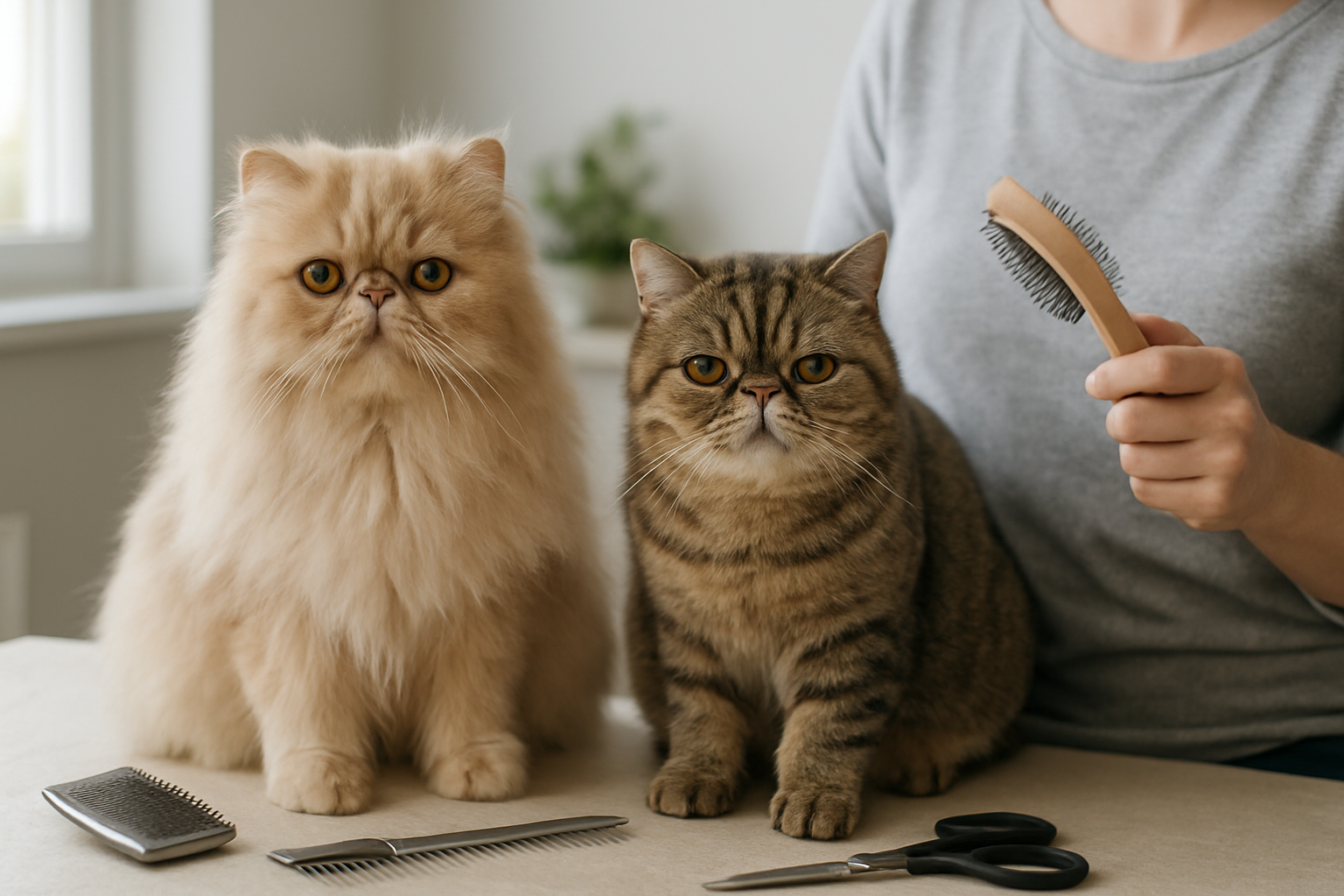
The most useful comparison is not simply “long hair versus short hair.” Look at how often you must groom, how much cooperation the cat needs, which areas become dirty or tangled, and whether you can maintain the routine consistently.
Persians have a long, fine coat that can form mats when loose hair is not removed. Exotic Shorthairs have a short but plush coat, so they still shed and benefit from brushing, but their hair is generally easier to reach and separate.
These are typical care patterns rather than guarantees. Individual coat texture, age, health, tolerance of handling, and the quality of early grooming habits can all change the amount of work involved.
Here is a practical side-by-side summary:
| Grooming factor | Persian cat | Exotic Shorthair |
|---|---|---|
| Coat type | Long, fine, flowing coat | Short, dense, plush coat |
| Brushing need | Frequent, often daily to prevent tangles | Regular brushing, usually shorter sessions |
| Mat risk | High, especially behind the ears, under the legs, and around the collar | Lower, though dense shedding can still create loose clumps |
| Bathing and drying | More time-consuming because the coat holds water and tangles | Usually simpler, but the cat still needs to be dried thoroughly |
| Face and eye care | May be frequent, particularly with a flat face or visible tear staining | May also be needed because the face is similarly short and broad |
| Home hair management | More loose hair and longer strands on furniture | Shorter hairs may be less visible but can still be plentiful |
| Best fit | Owners able to maintain a structured grooming routine | Owners wanting a Persian-like appearance with a simpler coat |
2. Understand the Persian cat grooming routine
Brushing is the main daily task
A Persian’s coat is most manageable when loose hair is removed before it twists into knots. A metal comb can help you check whether the coat is clear down to the skin, while a suitable soft brush can remove surface hair and make the session more comfortable.
Work in small areas rather than pulling through a large tangle. Pay particular attention to the armpits, chest, belly, hind legs, tail base, and behind the ears. If a mat is tight against the skin, do not forcefully cut or yank it at home; a professional groomer or veterinarian may be safer.
Bathing is less important than prevention
Bathing does not replace combing. A wet, tangled Persian coat can become harder to manage if it is not combed carefully and dried properly. If bathing is needed, use products intended for cats, avoid the eyes and ears, and make sure the coat is completely dry without overheating the cat.
Some owners choose professional grooming or a shorter practical trim. That can reduce coat maintenance, but it does not remove the need for skin checks, nail care, and face cleaning. Discuss major coat changes with a qualified groomer or veterinarian, especially if the cat has recurring mats or skin problems.
3. Understand the Exotic Shorthair grooming routine
The Exotic Shorthair is usually the easier option because its coat is short. A grooming session can often focus on removing loose hair, checking the skin, and keeping the cat comfortable rather than carefully separating long strands.
A soft brush or grooming tool designed for short-haired cats can help. Avoid aggressive scraping or excessive brushing, since the goal is to remove loose hair without irritating the skin. Regular short sessions are often easier for a cat than occasional, prolonged grooming after heavy shedding.
The coat is not maintenance-free. Its density can hide flaky skin, parasites, or small irritated areas, so run your hands gently over the body and inspect the skin periodically. For broader parasite-prevention guidance, see this practical safety guide for flea and tick prevention in indoor cats.
4. Treat face and eye care as a separate issue
Both breeds can have short, broad facial structures, so coat length does not tell the whole grooming story. Tear staining, damp facial folds, food residue, and discharge may require gentle cleaning with a clean, damp cloth or a product recommended for cats.
Do not use human eye products, fragranced wipes, or harsh cleaners near the eyes. Contact a veterinarian if discharge becomes thick or yellow, the eye is red or painful, the cat squints, or the skin stays raw. Persistent staining can have several causes and should not automatically be treated as a cosmetic problem.
Flat-faced cats may also need closer observation for noisy breathing, reduced tolerance of heat, or difficulty eating. These signs deserve veterinary advice rather than being dismissed as normal breed behavior.
5. Weigh grooming against shedding and household cleanup
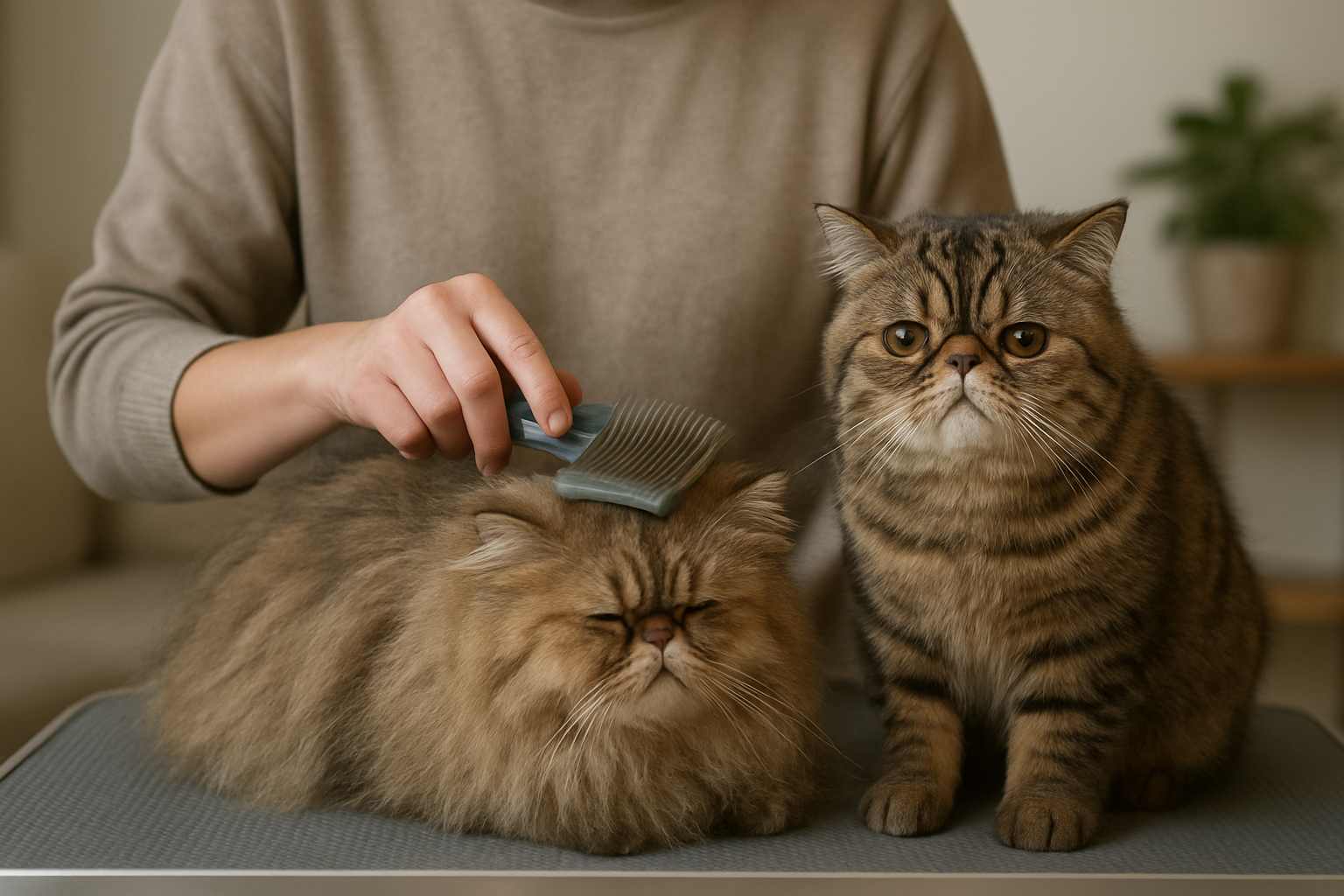
“Easier to groom” does not necessarily mean “sheds less.” An Exotic Shorthair may leave short hairs on fabrics, while a Persian may leave longer, more noticeable strands. Your furniture, flooring, clothing, and cleaning habits influence which type of hair feels more manageable.
- Use washable throws on favorite sleeping areas.
- Keep a grooming tool near the place where you usually handle the cat.
- Brush before heavy shedding becomes a household problem.
- Inspect combs and brushes regularly and replace damaged tools.
- Introduce handling gradually with brief sessions and rewards.
If allergies are influencing your decision, remember that neither breed is reliably hypoallergenic. Allergens come mainly from proteins in dander, saliva, and skin oils rather than from hair length alone. For broader context, read this practical guide to cat breeds and allergies.
6. Choose the better match for your routine
Choose an Exotic Shorthair when:
- You want a shorter, more manageable brushing routine.
- You can provide regular care but do not want daily long-coat detangling.
- You prefer to spend less time dealing with mats and coat separation.
- You still have time for facial cleaning, nail trimming, and health checks.
Choose a Persian when:
- You genuinely enjoy hands-on coat care and can keep a consistent schedule.
- You are prepared to check the coat thoroughly rather than brushing only the surface.
- You have access to a cat-experienced groomer or veterinary support if mats develop.
- You accept that appearance and coat upkeep may require a meaningful daily commitment.
Neither breed is automatically the better choice for every owner. A calm, cooperative Persian may be easier for one household than an Exotic Shorthair that strongly resists handling. Ask a breeder, rescue, or veterinarian about the individual cat’s grooming tolerance and medical history.
7. Use this grooming-readiness checklist
- Can you set aside regular time for brushing?
- Do you know how to check for mats without pulling the skin?
- Will you clean facial areas gently and stop if the cat shows pain?
- Do you have a plan for nail care and professional grooming if needed?
- Can you recognize breathing problems, eye pain, skin irritation, or sudden grooming changes?
- Will you arrange veterinary care when a grooming issue may reflect illness?
8. Avoid common grooming decisions that cause problems
- Choosing by coat length alone: A short coat is simpler, but facial structure and health needs still matter.
- Waiting until the coat looks tangled: Mats can start close to the skin before they are obvious.
- Using human grooming products: Cats may lick residues, and some ingredients can irritate their skin or eyes.
- Forcing a long session: Repeatedly restraining a frightened cat can make future care harder.
- Assuming tear staining is harmless: Sudden or painful eye changes should be checked by a veterinarian.
- Shaving without a plan: A trim may help in some cases, but it does not solve every skin or health issue.
9. What if grooming is already difficult?
If your cat bites, scratches, pants, or becomes extremely distressed, stop and give it time to settle. Break the routine into small steps: touch the brush, reward calm behavior, brush one small area, and finish before the cat becomes overwhelmed.
For severe mats, skin sores, repeated eye discharge, painful handling, or breathing concerns, seek veterinary guidance. A veterinarian can address medical causes and recommend a safe grooming plan; a qualified cat groomer may help with coat removal when the cat can be handled safely.
10. Take the next steps before bringing a cat home
- Ask what grooming the individual cat currently tolerates.
- Check the coat, skin, eyes, ears, and nails during a calm visit.
- Budget time for routine care, not only occasional baths.
- Buy a basic cat comb or brush, nail-care equipment, and washable bedding.
- Arrange a veterinary examination and ask about breed-related warning signs.
FAQ about Persian cats and Exotic Shorthairs
Does an Exotic Shorthair need daily brushing?
Not necessarily. It needs regular brushing, especially during heavier shedding, but the exact frequency depends on coat density and the individual cat.
Can a Persian cat be low-maintenance with a short haircut?
A shorter trim may reduce tangling, but it does not eliminate facial care, nail care, skin checks, or future coat growth. Professional help may be appropriate when mats are severe.
Which breed is better for a first-time cat owner?
An Exotic Shorthair is often the more forgiving choice for someone who wants a Persian-like companion without the same long-coat workload. Even so, learn the facial and health-care needs before deciding.
Final verdict: For most households comparing grooming workload, the Exotic Shorthair is easier because its short coat reduces detangling and makes routine brushing quicker. A Persian can be the right choice when you are willing to maintain a consistent, hands-on grooming schedule. Choose the breed whose care routine you can perform reliably—not simply the coat you find most attractive.
For more practical pet-care guidance, visit the LaokPet homepage.