Wondering how to help a new cat settle in? Start with less space, less noise, and a predictable routine. Prepare one quiet room, let your cat hide if needed, and allow them to choose when to approach you. Most cats adjust more comfortably when their first days are calm and unhurried.
A new home can be exciting, but it can also feel unfamiliar and overwhelming. Your cat may hide, eat less than usual, avoid interaction, or explore mostly at night. These early behaviours do not automatically mean something is wrong. Patience, careful observation, and basic safety are the best starting points.
Before your cat arrives
Preparation helps you avoid making decisions while your cat is frightened or the household is busy. Choose a room that can be closed securely and is away from heavy foot traffic. A spare bedroom is often suitable. A bathroom may work temporarily if it is safe, comfortable, and large enough for the essentials.
Remove or secure hazards before arrival. Close windows and check screens, block narrow gaps where a cat could become trapped, and put away medicines, cleaning products, small objects, string, and toxic plants. Keep toilet lids closed and secure loose electrical cords. Check that doors and windows latch properly.
Decide where food, water, litter, sleeping areas, and scratching surfaces will go. Keep the litter tray well away from food and water. Cats generally prefer a little distance between these areas, and a quiet location can make toileting easier.
New-cat supplies checklist
- Food your cat already knows, if available, plus a clean food bowl
- A separate water bowl or another suitable water container
- At least one litter tray, with litter and a scoop
- A washable bed or blanket, along with a safe covered hiding place
- A sturdy scratching surface
- A few simple toys without loose parts that could be swallowed
- A secure carrier for travel
- Basic grooming items suited to your cat’s coat
- Paper towels and a mild, pet-safe cleaning product for accidents
Ask the adoption organisation, previous carer, or breeder what food, litter, routine, and comfort items your cat has been using. Keeping familiar choices at first can reduce change. If you need to change food or litter, do it gradually when your cat is settled rather than changing everything on the first day.
Set up a safe starter room

A starter room gives your cat a manageable territory. Put the carrier inside, close the door, and make sure the room is calm before your cat arrives. A hiding place is essential. This could be a covered cat bed, a sturdy cardboard box, or a space beneath furniture that is safe and easy for you to monitor.
Place the litter tray in a private but accessible corner. Put food and water on the opposite side of the room, away from the tray. Add a bed or blanket, a scratching surface, and one or two quiet toys. Leave clear paths between these resources so your cat does not have to squeeze through crowded areas.
Do not remove a cat from its hiding place simply because you want to see it. Hiding is often a way to manage stress. Instead, make sure the hiding place is safe, then give your cat time. You can sit quietly in the room, read softly, or speak in a calm voice without reaching in.
The first arrival: what to do
Travel directly to your prepared room with your cat secured in a carrier. Avoid opening the carrier in a hallway, car park, or other place where a frightened cat could escape. Put the carrier on the floor, close the room door, and open the carrier door. Then step back.
Your cat may come out quickly, remain inside, or move straight to a hiding place. All three responses can be normal. Do not pull your cat out, pass them from person to person, or encourage visitors to watch closely. Keep the room quiet and allow your cat to decide when to investigate.
Offer a small amount of familiar food and fresh water. Some cats eat once the room is empty; others may not eat immediately. Check on your cat regularly but briefly. Move slowly, avoid staring, and let your cat turn away when they need a break.
The first 24 hours
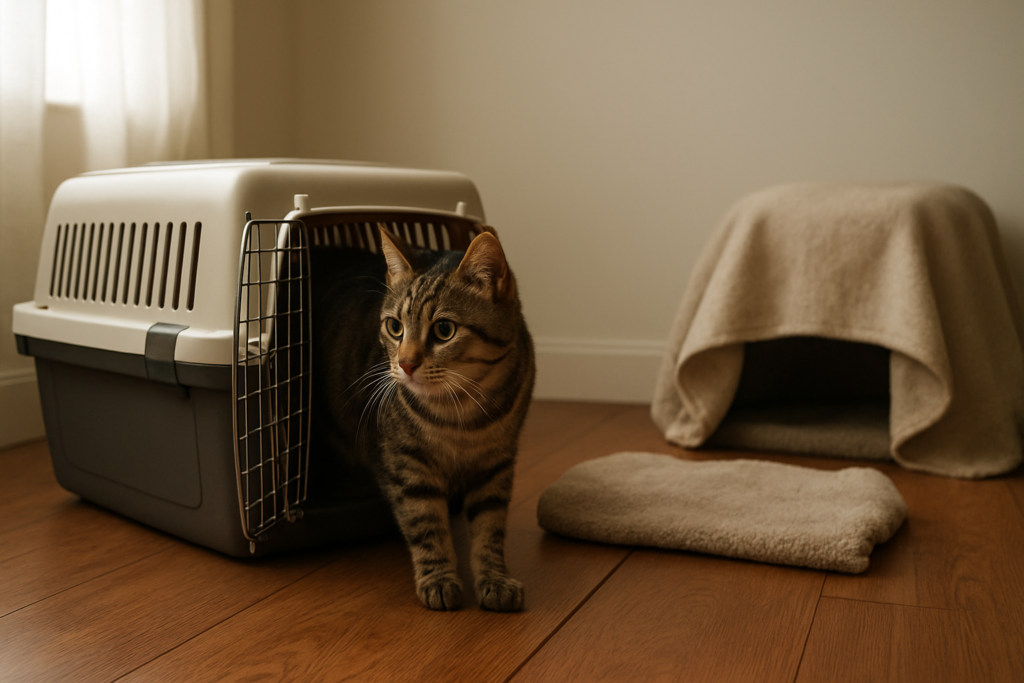
During the first day, your main goals are safety, rest, hydration, food access, and a chance to use the litter tray. You do not need to entertain your cat or make them affectionate. A quiet day is a successful day.
- Keep the starter-room door closed.
- Use the same food and feeding times where possible.
- Refresh water and remove waste from the litter tray.
- Spend short, peaceful periods in the room without demanding contact.
- Keep loud music, strong scents, cleaning activity, and sudden visitors away.
- Watch from a distance for eating, drinking, urination, defecation, and general movement.
Some cats become active after dark when the home is quiet. That is why checking the food and litter tray later can be useful. Do not interpret daytime hiding alone as failure to settle. Look at the overall pattern across several checks.
How to build trust without pressure
Trust grows when your cat learns that you are predictable and safe. Use a soft voice and sit at your cat’s level when practical. Turn your body slightly to the side instead of leaning directly over them. Slow blinking and looking away can create a less intense interaction, but your cat should never be forced to respond.
Let your cat initiate touch. If they approach, offer a relaxed hand for them to sniff. Begin with a brief stroke around the cheeks or shoulders if they appear comfortable. Stop before your cat becomes tense or tries to leave. Ending a pleasant interaction early helps your cat feel in control.
Watch body language. A relaxed body, normal grooming, gentle exploration, and a tail held naturally can suggest growing comfort. Flattened ears, a tightly tucked body, repeated hissing, swatting, growling, rapid tail movements, or attempts to escape mean you should increase distance and reduce stimulation.
Feeding and litter routines
Predictable routines help your cat understand what to expect. Offer meals at consistent times and keep the bowls in the same places. Follow the feeding guidance provided by the cat’s previous carer when possible. Sudden food changes can upset the stomach, so transition gradually if a change is needed.
Keep fresh water available. Some cats prefer water away from food, while others have individual preferences about bowl shape or location. The important first step is to provide clean water in a quiet, accessible place.
Scoop the litter tray regularly and avoid strong fragrances. If you know which litter your cat previously used, begin with that type. Do not punish accidents. Clean the area thoroughly with a suitable pet-safe cleaner and consider whether the tray is too dirty, difficult to reach, poorly placed, or surrounded by stress.
If your cat does not use the litter tray, look for patterns and contact a veterinary professional if the problem continues or if there are signs of discomfort. Sudden toileting changes can have medical as well as environmental causes.
When to let your cat explore more of the home
There is no universal number of days that every cat needs. Consider expanding access when your cat is regularly eating, drinking, using the litter tray, grooming, and moving around the starter room with less fear. They may approach you, play, rest in open areas, or show interest in the closed door.
Open the door and allow your cat to investigate at their own pace. Keep the starter room available as a retreat. Do not carry your cat around the home for a tour. Let them return to their familiar base whenever they want.
At first, give access to one additional area rather than the entire home. Close unsafe rooms and supervise exploration. Check stairways, balconies, open windows, cupboards, appliances, and other possible hiding or escape points. Expand the territory again when your cat appears comfortable in the first new area.
| What you notice | Helpful next step |
|---|---|
| Hiding but eating, drinking, and using the tray | Keep the room quiet and continue short, calm visits. |
| Exploring at night | Leave safe paths and resources available; avoid forcing daytime activity. |
| Approaching people confidently | Offer gentle interaction, then allow breaks and retreat. |
| Hissing or retreating when the door opens | Close the door and try again later at a slower pace. |
| Relaxing in several areas of the home | Maintain the starter room as a safe option while routines continue. |
Introducing your new cat to people
Ask household members to follow the same rules: move slowly, use quiet voices, and do not chase, pick up, or corner the cat. Children need close supervision and simple instructions. They can sit quietly, toss a toy gently away from themselves, or read in the room. They should not reach into a hiding place.
Introduce visitors only after your cat has had time to settle. Keep visits short and give your cat a way to leave. If your cat hides, visitors should ignore the hiding place rather than trying to coax them out. A cat that watches from a distance is still learning about people.
Introducing your cat to other pets

Keep a new cat separate from resident pets at first. This protects everyone from a rushed interaction and gives your new cat time to establish a safe base. Make sure each animal has access to its own food, water, resting areas, and litter resources.
Begin with scent before face-to-face contact. You can exchange bedding or use a clean cloth to carry each animal’s scent, provided neither animal becomes distressed. Let them investigate the scent at a distance and keep the experience calm.
Next, allow brief visual contact through a secure barrier. Watch for escalating fear, intense staring, lunging, or repeated attempts to attack. If either animal is distressed, increase distance and return to an easier step. Later, arrange short supervised meetings with escape routes and no forced contact.
Do not leave animals together unsupervised until you are confident that interactions are calm and safe. Dogs should be managed carefully, especially if they chase or become highly excited around cats. A veterinary professional or qualified behaviour professional can help with a difficult introduction.
For more practical guidance, browse LaokPet’s cat care articles and the wider pet care guides.
Signs your cat is making progress
Progress may be quiet and uneven. Your cat does not need to become social immediately. Look for small changes such as staying out of hiding for longer, eating while you are nearby, grooming, stretching, playing, using the scratching surface, resting in open areas, or choosing to approach you.
A cat may take one step forward and then hide again after a loud noise or a new visitor. This does not necessarily erase earlier progress. Return to a calmer routine and give your cat time to recover. Keep a simple daily note of food, water, litter use, behaviour, and interactions if that helps you notice gradual patterns.
Common mistakes to avoid
- Giving too much space too soon: A whole house can be difficult to understand. Start with a manageable room.
- Forcing affection: Holding or stroking a frightened cat can make handling feel unsafe.
- Constant checking: Frequent interruptions prevent rest. Use brief, predictable visits.
- Changing everything at once: Keep food, litter, and routines familiar where possible.
- Allowing uncontrolled introductions: A rushed meeting can create fear between pets or people.
- Punishing hiding or accidents: Punishment increases fear and does not explain the behaviour you want.
- Ignoring escape risks: Doors, windows, balconies, and carriers require careful attention.
- Comparing your cat with another: Age, history, personality, and previous experiences affect adjustment.
Troubleshooting early challenges
My cat will not come out
Confirm that the hiding place is safe and that food, water, and the litter tray are easy to reach. Reduce noise and sit quietly for a few minutes at a time. Do not drag your cat out. If your cat is not eating or drinking, or you cannot confirm litter use, seek veterinary advice rather than waiting indefinitely.
My cat seems frightened of me
Make yourself less demanding. Sit sideways, avoid reaching, and place food down before moving away. Use a consistent voice and routine. You can offer play with a toy that keeps space between your hands and the cat, but stop if your cat becomes tense.
My cat is vocal at night
Check basic needs first: access to water, food according to the planned routine, a clean litter tray, and a safe environment. Avoid creating a pattern in which distressed vocalising always leads to exciting attention. If the vocalisation is sudden, intense, or accompanied by other changes, ask a veterinary professional for advice.
My cat has a conflict with a resident pet
Separate them safely and allow both animals to calm down. Return to scent exchange and barrier-based introductions. Never put your hands between fighting animals. If aggression continues, obtain individual guidance from a veterinary professional or qualified behaviour professional.
Veterinary safety guidance
Arrange appropriate veterinary care for your new cat and ask about preventive care, identification, parasite control, nutrition, and any records you received. A new cat may need an examination even when they appear well, particularly if their health history is incomplete.
Contact a veterinary professional promptly if your cat refuses food, repeatedly vomits, has ongoing diarrhoea, seems unusually weak, has trouble breathing, appears in pain, or shows a sudden major behaviour change. Seek urgent veterinary help for breathing difficulty, collapse, severe injury, uncontrolled bleeding, suspected poisoning, seizures, or repeated straining to urinate with little or no urine. Urinary blockage can be life-threatening, especially in male cats, so do not wait for it to resolve on its own.
This guidance cannot diagnose illness. When you are unsure, describe what you have observed, when it began, and whether your cat is eating, drinking, urinating, and defecating. Keep potentially harmful substances and packaging available for identification only if it is safe to do so, and follow the veterinary service’s instructions.
Next steps after the settling-in period
Once your cat is comfortable, continue the routines that helped them adjust. Provide daily opportunities for play, scratching, resting, and gentle interaction. Keep resources clean and accessible, and make changes gradually. Continue to offer hiding places even when your cat becomes confident; a retreat is useful in any home.
Build handling skills slowly. Reward calm behaviour around the carrier, grooming tools, and gentle touch. Never turn every interaction into a medical or grooming task. Short, positive practice can make future care less stressful.
The best answer to how to help a new cat settle in is to give them control within a safe structure. Prepare thoughtfully, move at their pace, observe the basics, and ask for veterinary help when health concerns appear. With steady care and time, your cat can begin to treat your home as a secure place to rest, explore, and belong.